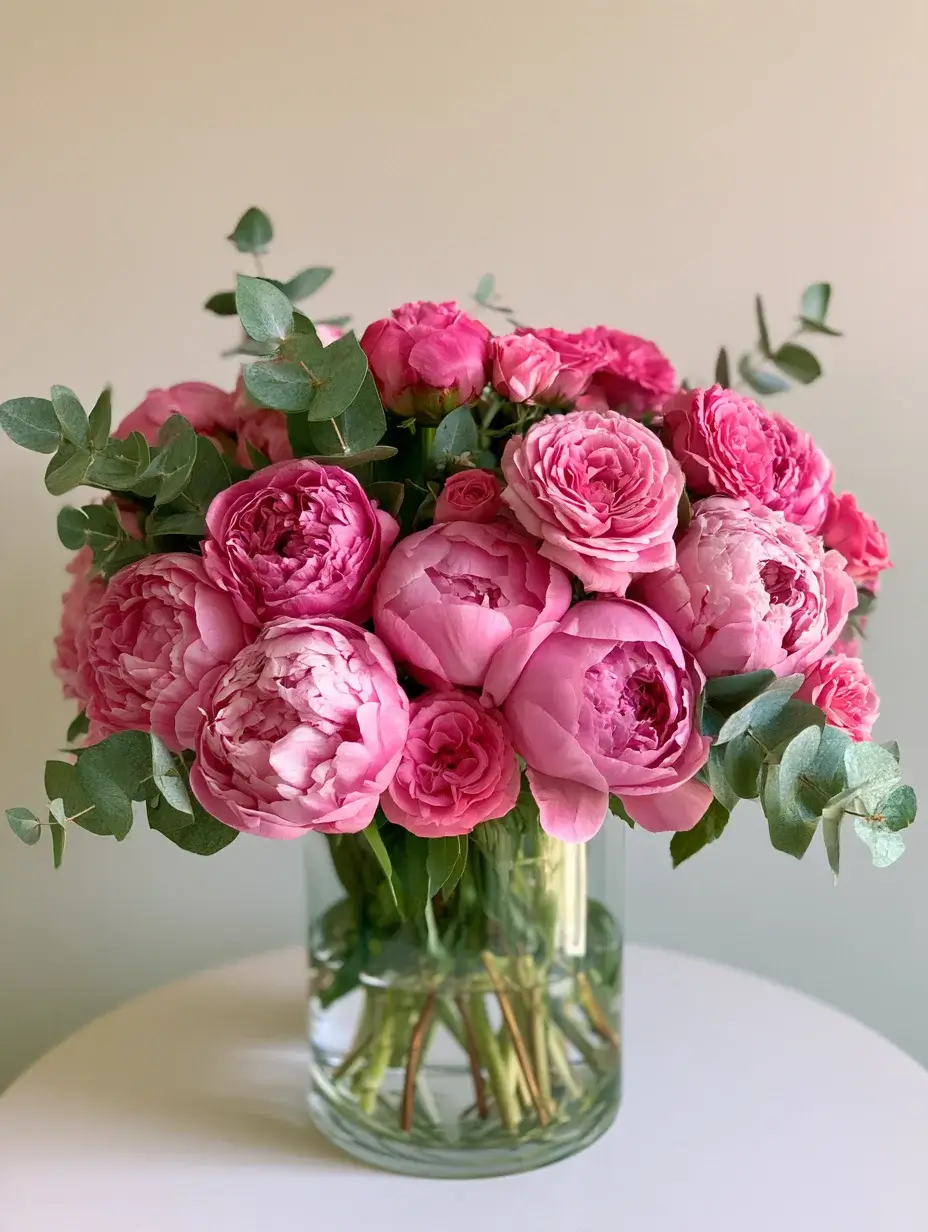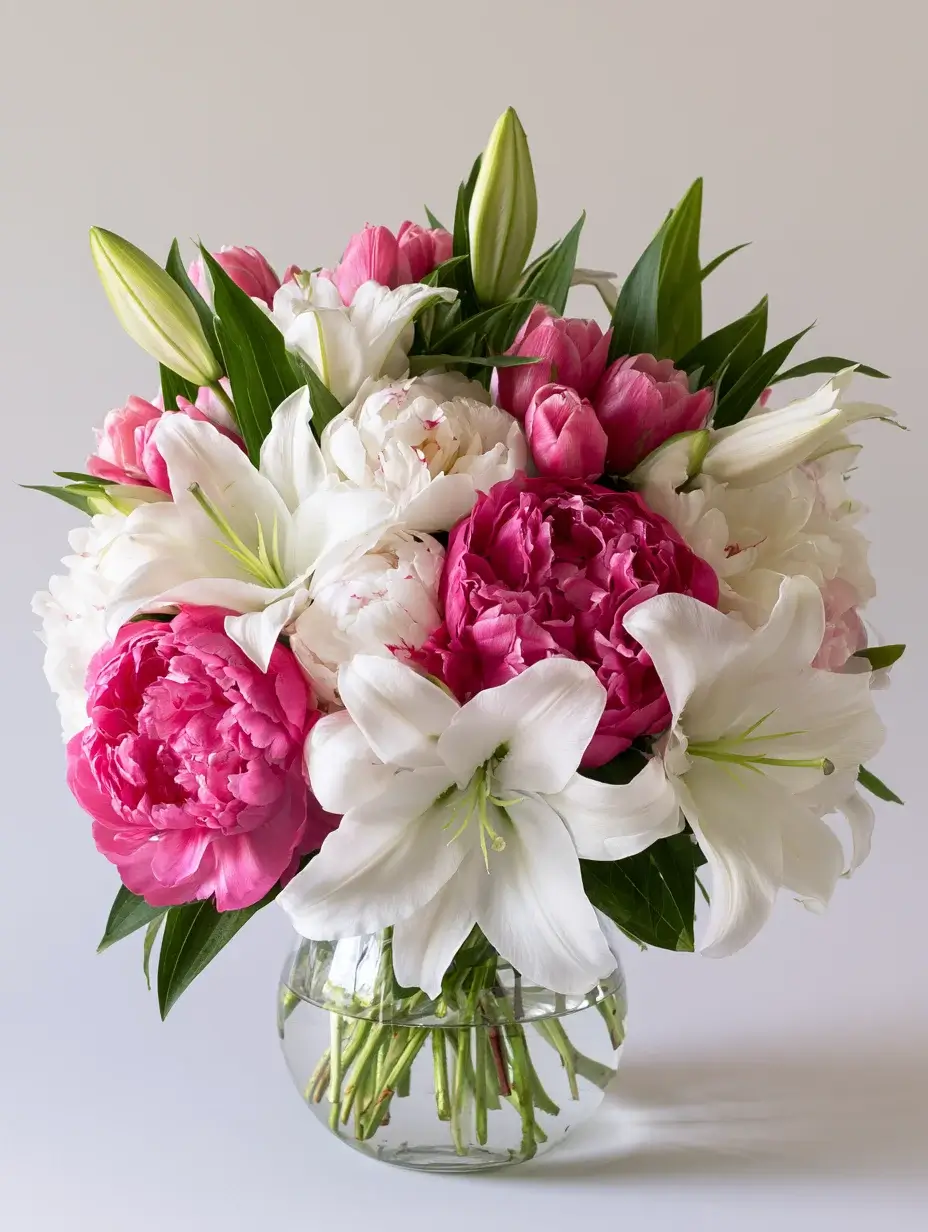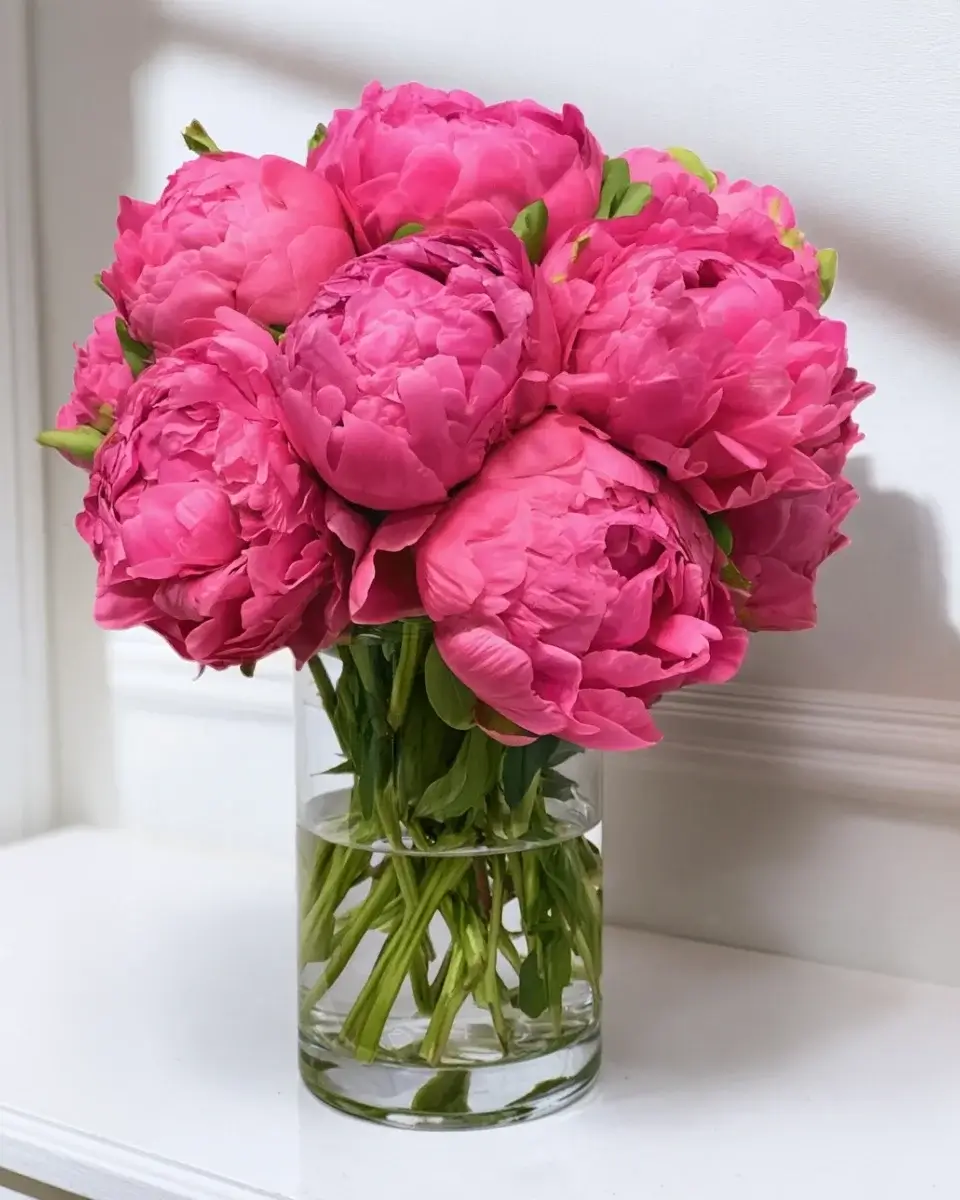
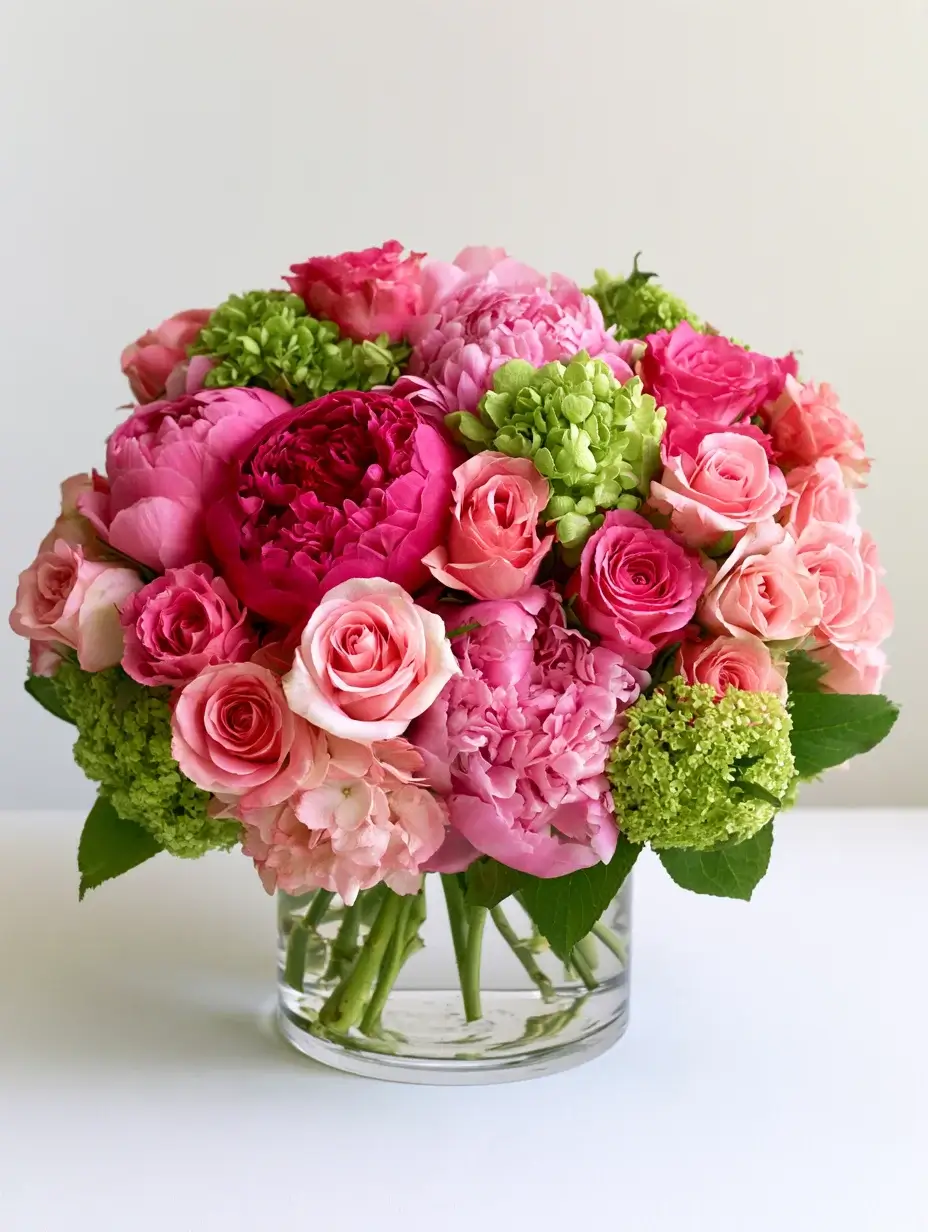

Peonies are the undisputed queens of the romantic floral world. Known for their generously layered petals, rounded silhouettes, and lush volume, they have a unique ability to make any space feel celebratory and refined.
Whether you are designing a centerpiece for your wedding, curating a thoughtful gift for a loved one, or simply elevating your home, knowing how to pair peonies with the right companion flowers is the secret to a breathtaking arrangement.
The most effective pairings depend on the peony variety, its color, and the story you want the design to tell. This guide will help you balance scale, texture, and color to ensure your peonies remain the stunning visual focus.
💡 Quick Takeaway: The goal is not to match every element to the peony’s size, but to use thoughtful contrast in scale, texture, and form. This keeps the arrangement balanced, dynamic, and distinctly elegant.
How to Choose the Right Companion Flowers
Before selecting supporting blooms, consider the mood you wish to create. Should the finished design feel soft and romantic, lively and seasonal, or restrained and elegant?
A double peony, with its tightly layered, cabbage-like petals, creates a vastly different effect than a simpler single-form bloom. Furthermore, pale blush, deep red, and creamy white peonies each demand different color palettes.
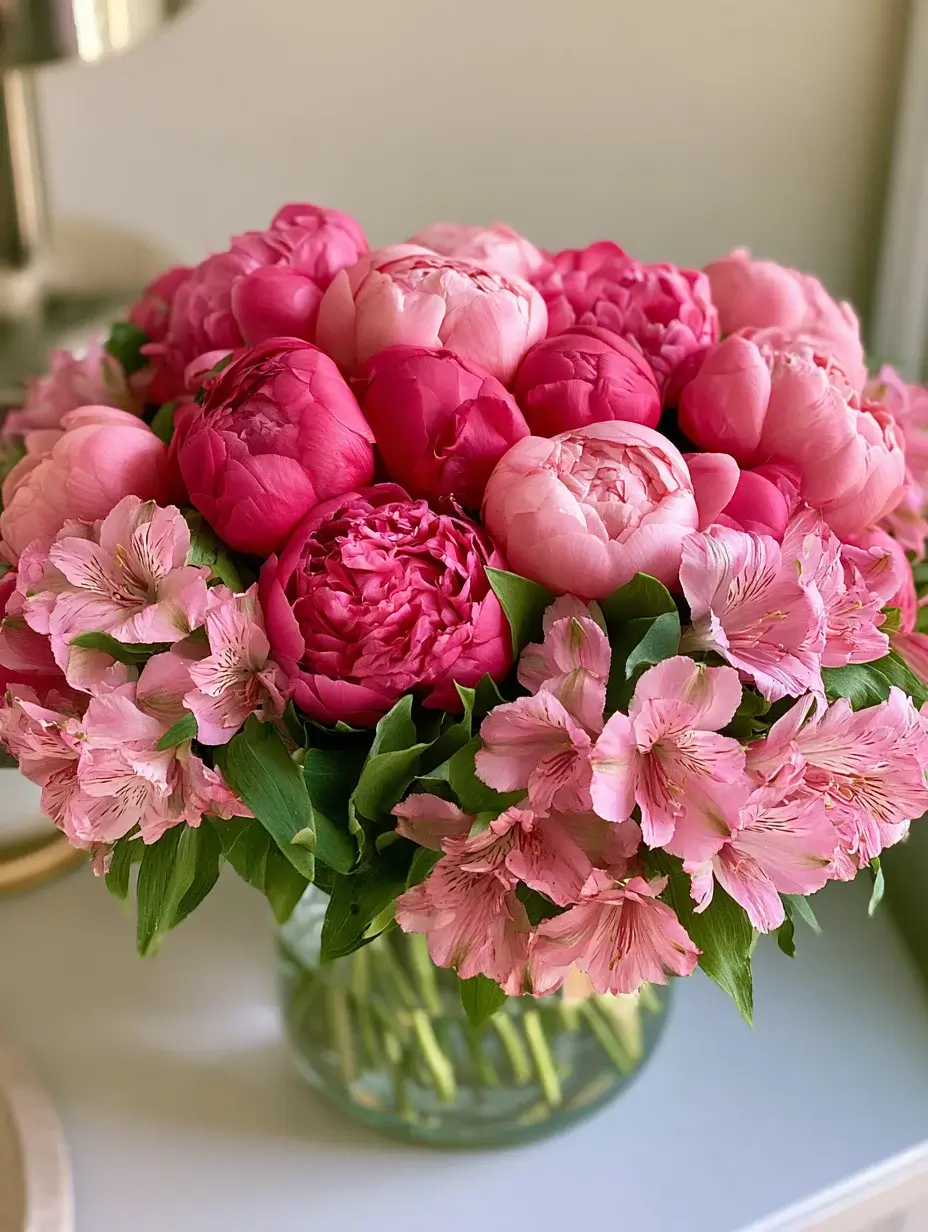
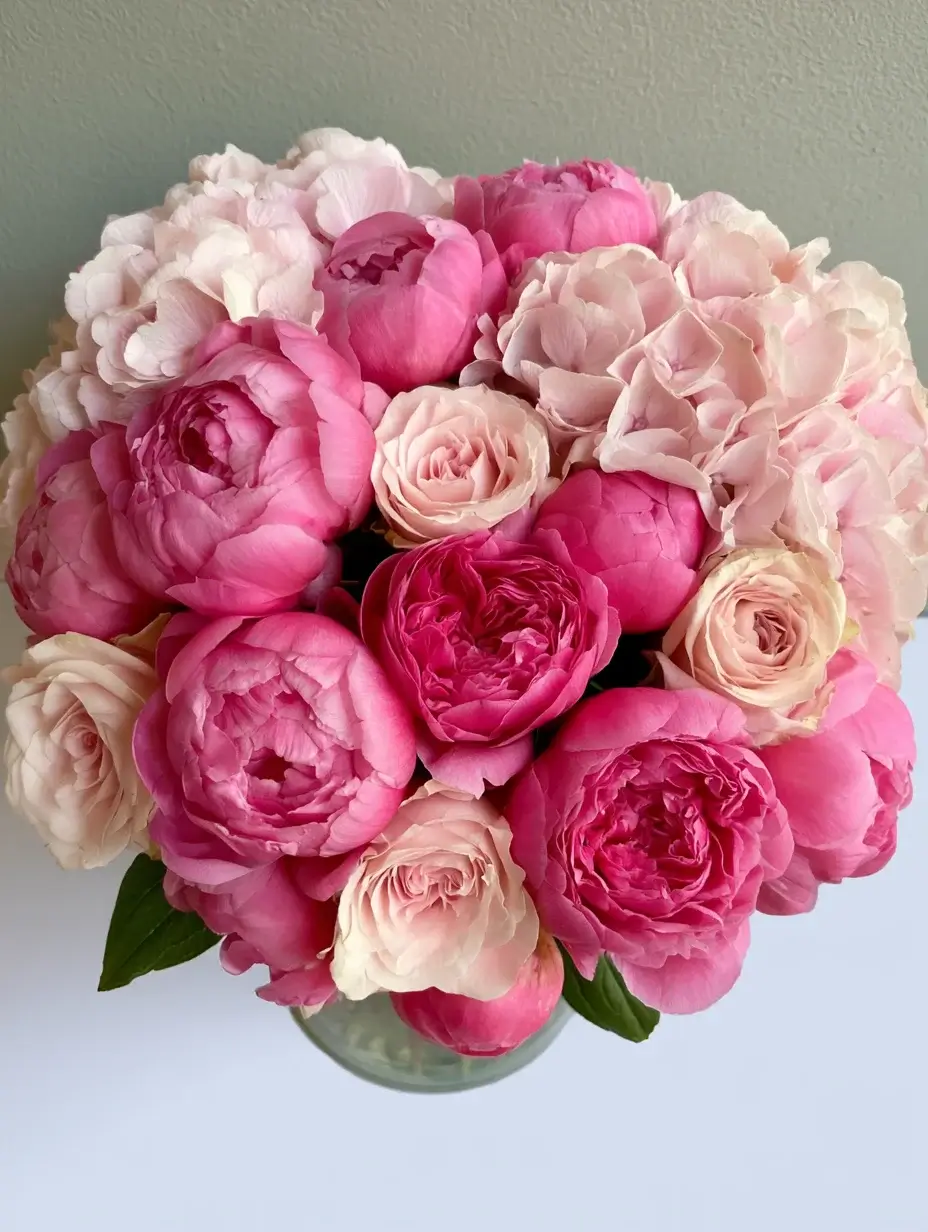
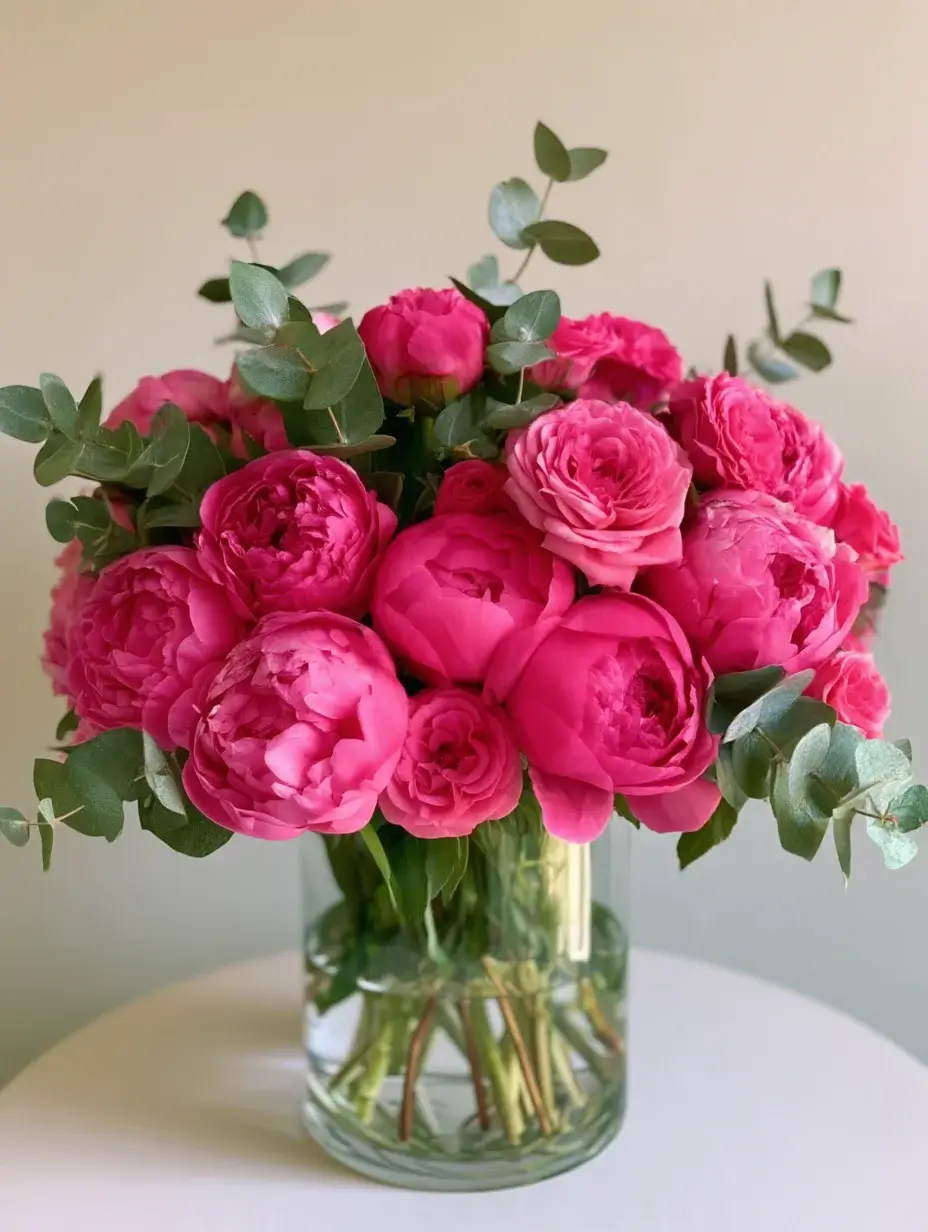
Balance Scale, Texture, and Form
Because peonies can dominate a composition, especially when grouped, balance their lush presence with:
- Smaller flowers to provide intricate detail.
- Airy stems to create graceful movement.
- Slender or branching shapes to offset the peony’s rounded outline.
- Thoughtful foliage to add structure and a quiet, sophisticated backdrop.
Note on Seasonality: Peonies have a relatively short, highly anticipated peak season. Always check which companion blooms are available during the same window, and have elegant alternatives ready if your first choice is out of season.
Top Companion Flowers to Pair with Peonies
The flowers surrounding your peonies can either echo their fullness or introduce a beautiful, contrasting shape. Here are the most effective pairings:
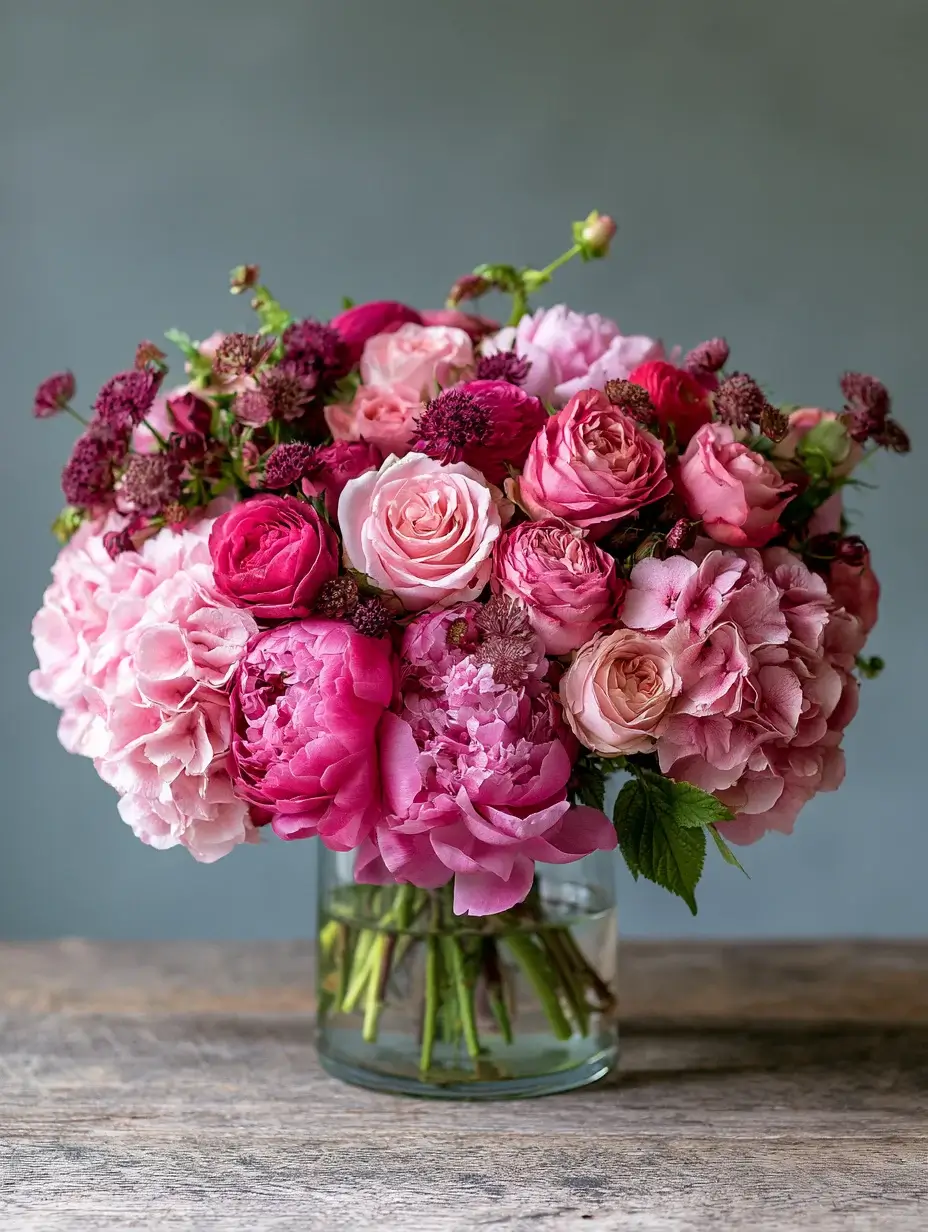
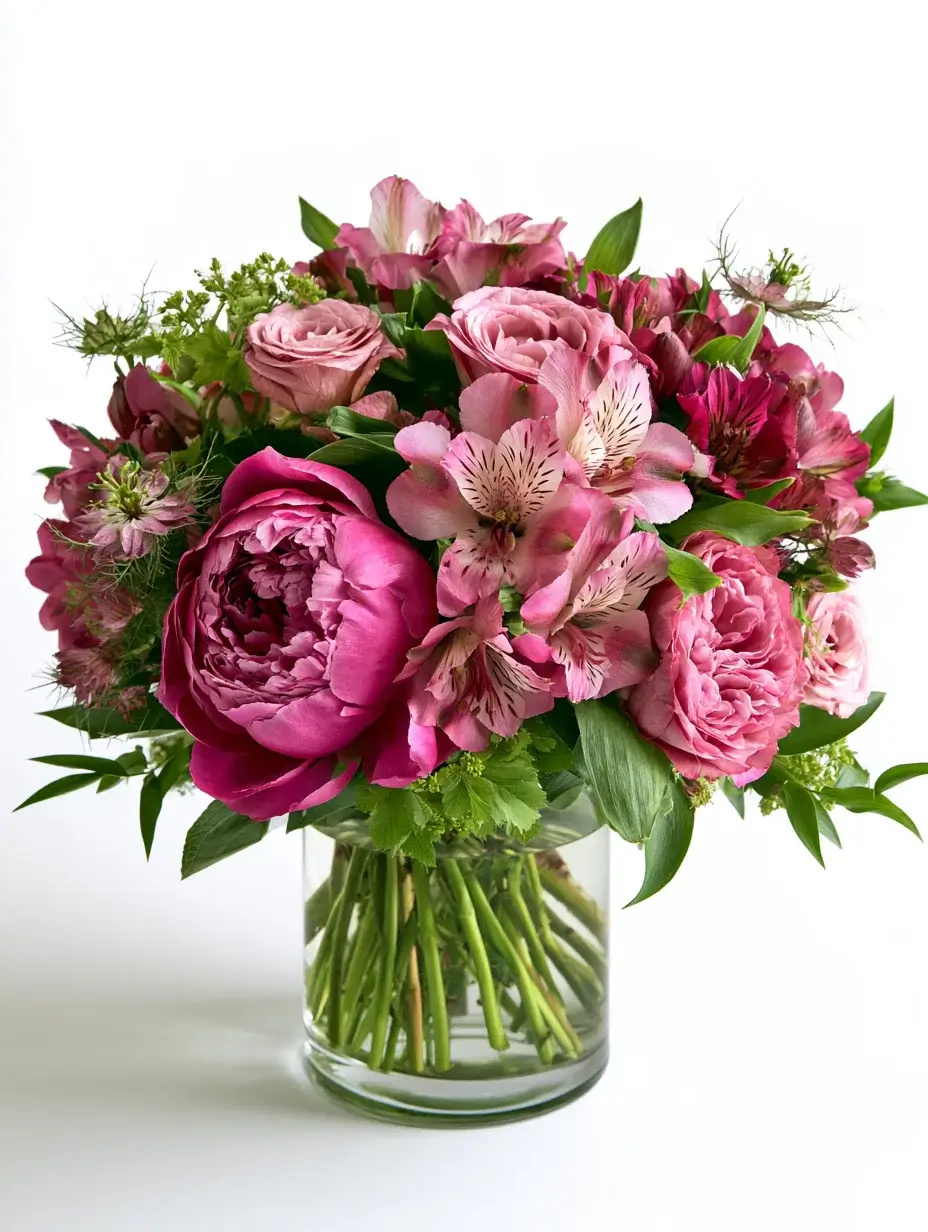
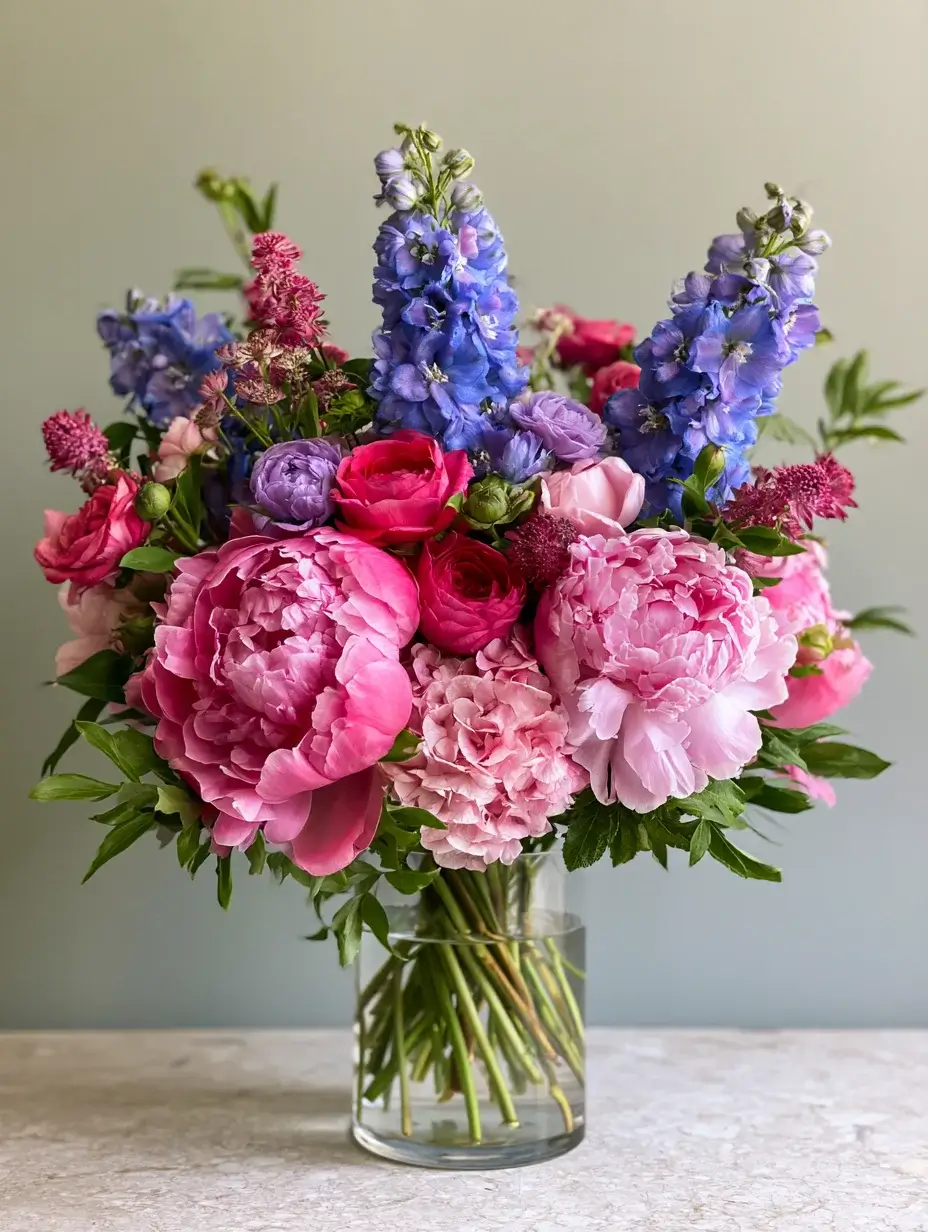
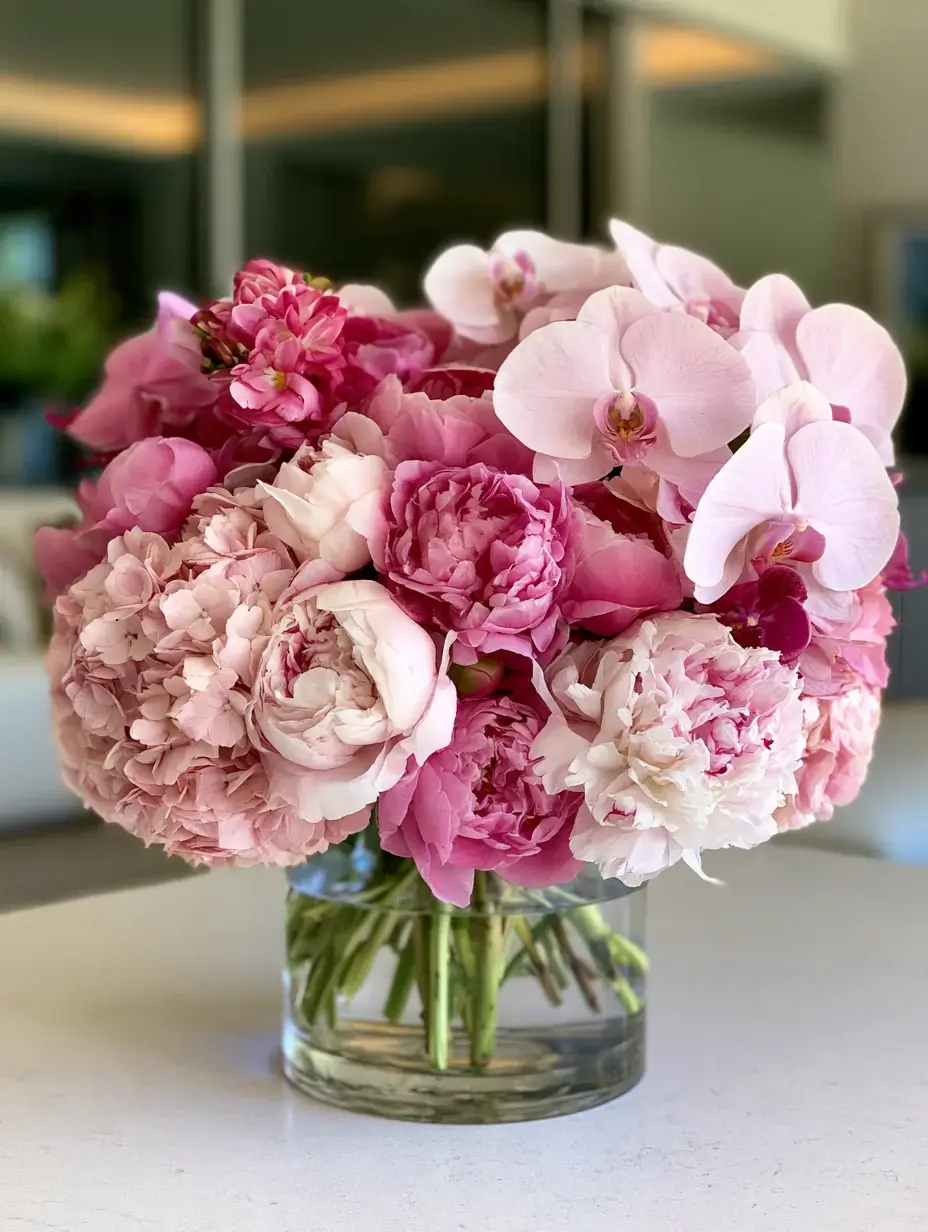
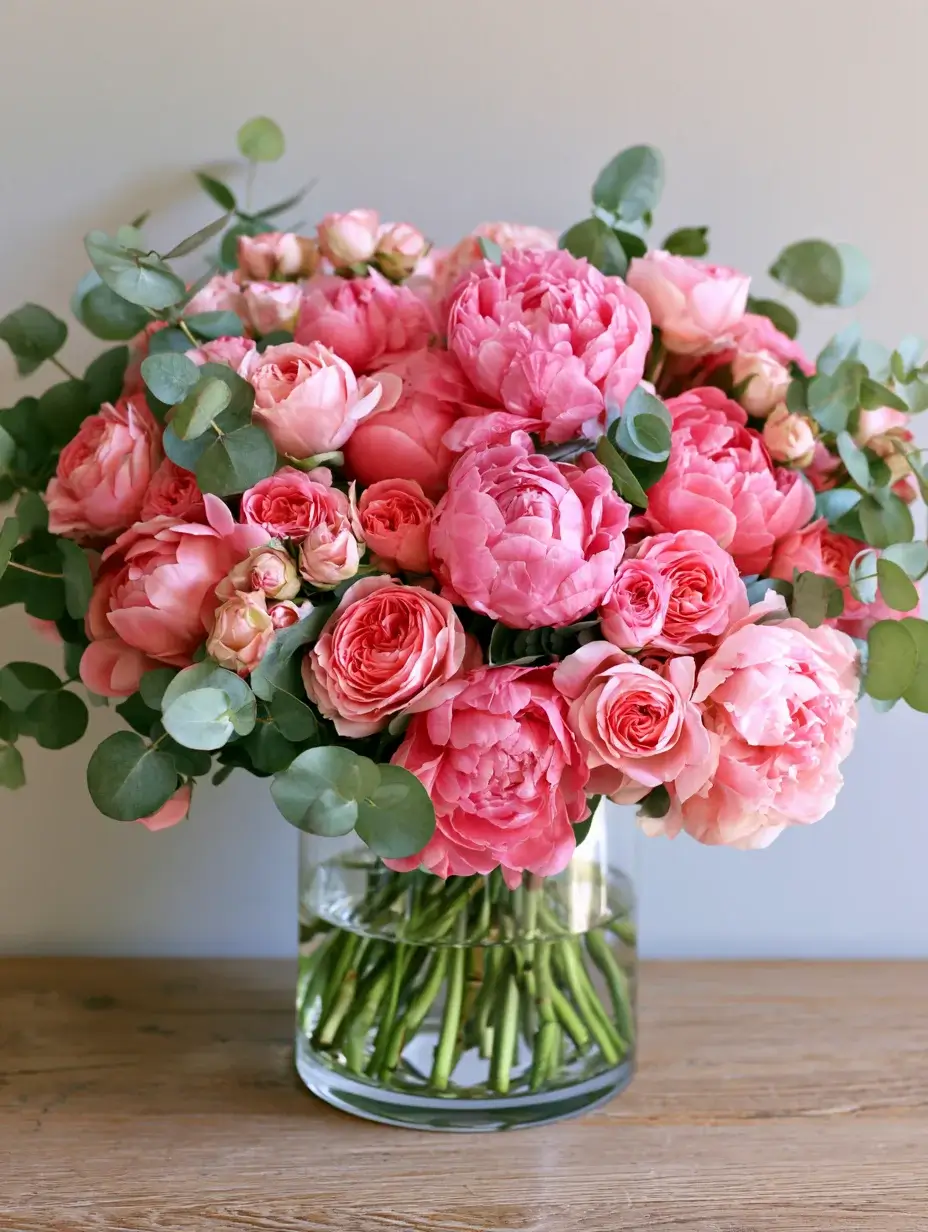
- Roses & Ranunculus: For a romantic, abundant look. Their many overlapping petals blend naturally with peonies, creating a cohesive, highly textured arrangement. Choose blooms in similar tones for a soft, unified effect, or use subtle shifts in shade to add depth.
- Sweet Peas: For a lighter, poetic touch. Their delicate petals, slender stems, and gentle fragrance bring airiness to a bouquet of substantial peonies. Let a few stems reach outward to create movement without adding visual weight.
- Tulips: For fresh, clean lines. Their upright stems and smooth, simple cups beautifully offset the peony’s complex form, making an arrangement feel fresh and less densely packed.
- Anemones: For graphic contrast. Their dark, prominent centers stand out strikingly against pale peony petals, drawing the eye through the bouquet and adding a modern, defined focal point.
- Lisianthus: For graceful, measured accents. With ruffled blooms that resemble roses but remain lighter in scale, lisianthus offers a broad color range that easily coordinates with or subtly accents peonies.
Mastering Color and Proportion
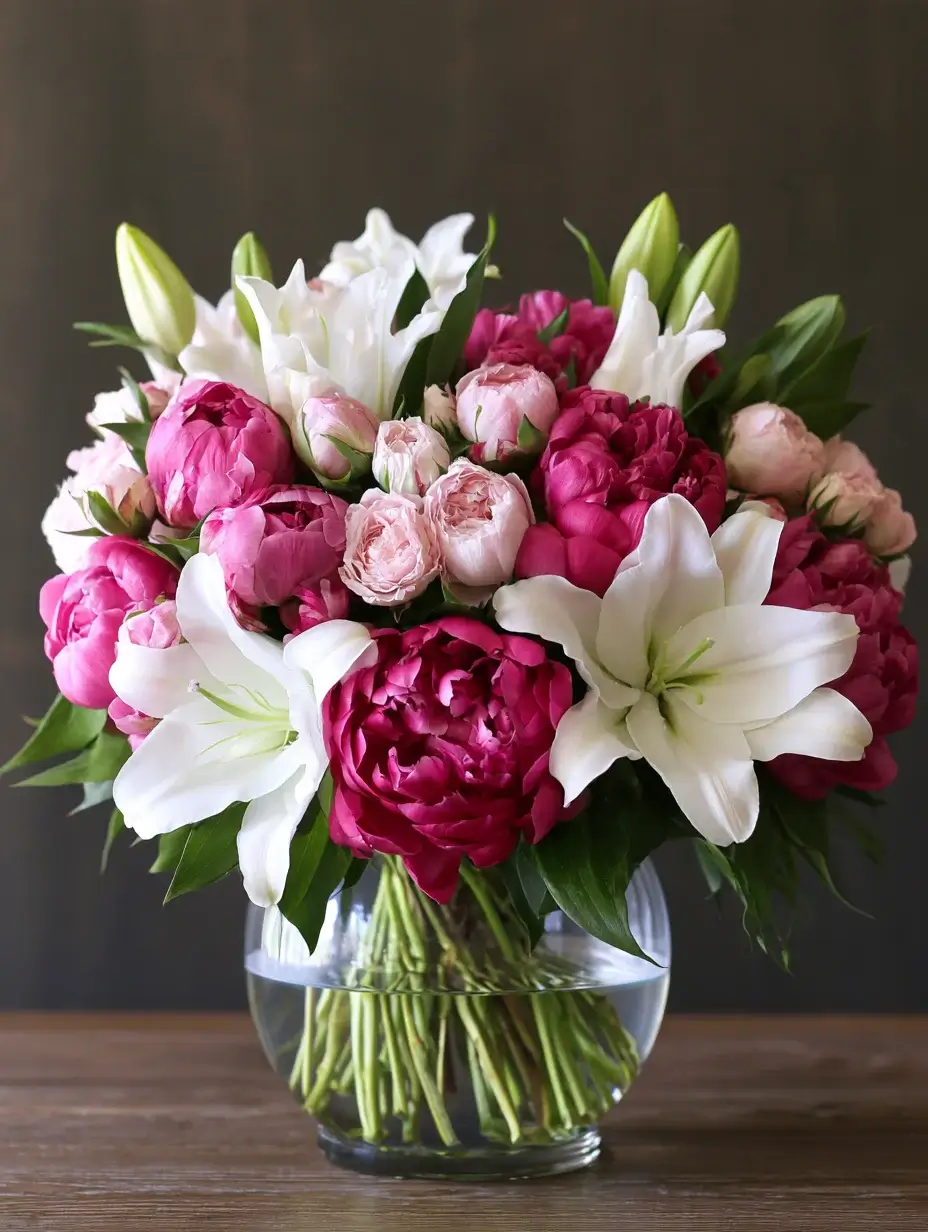
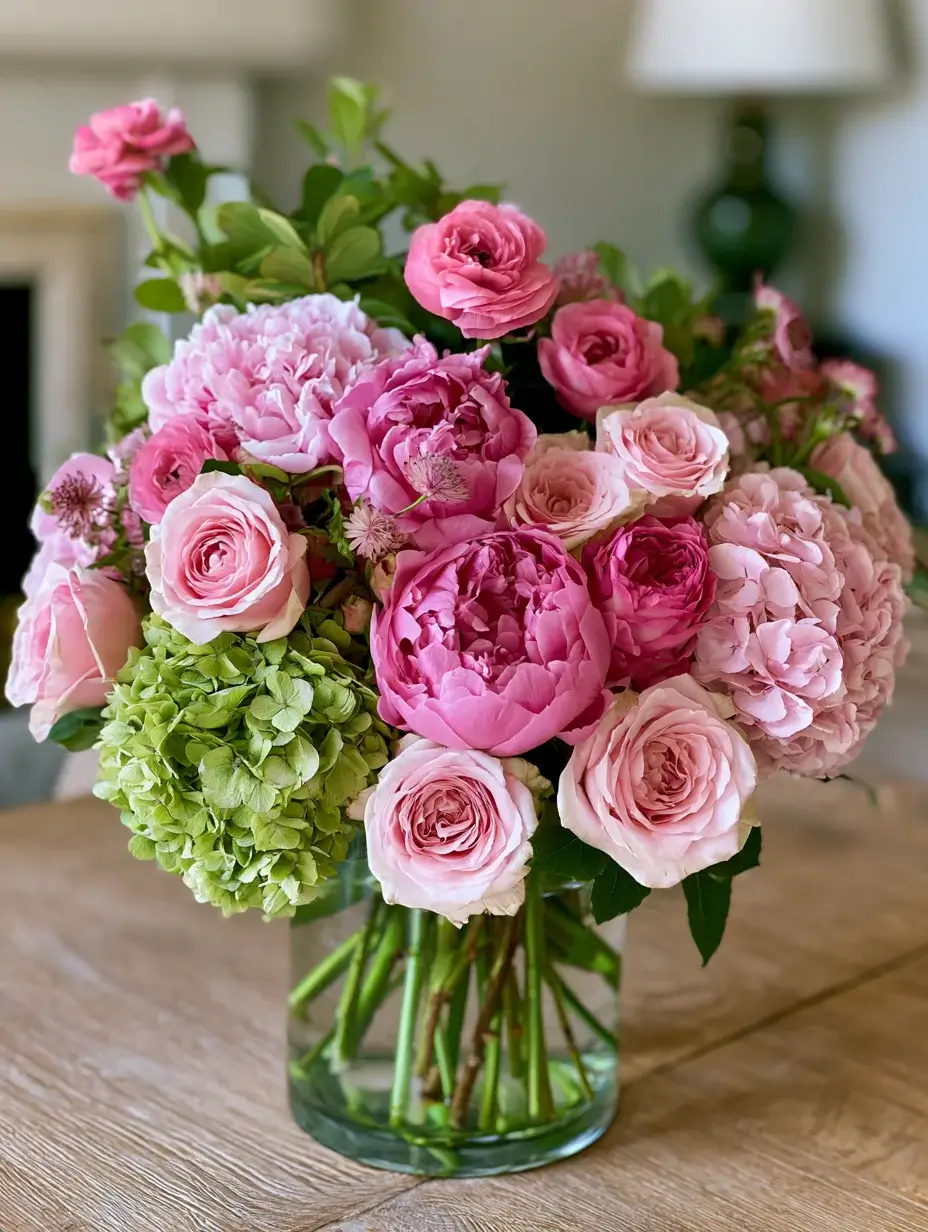
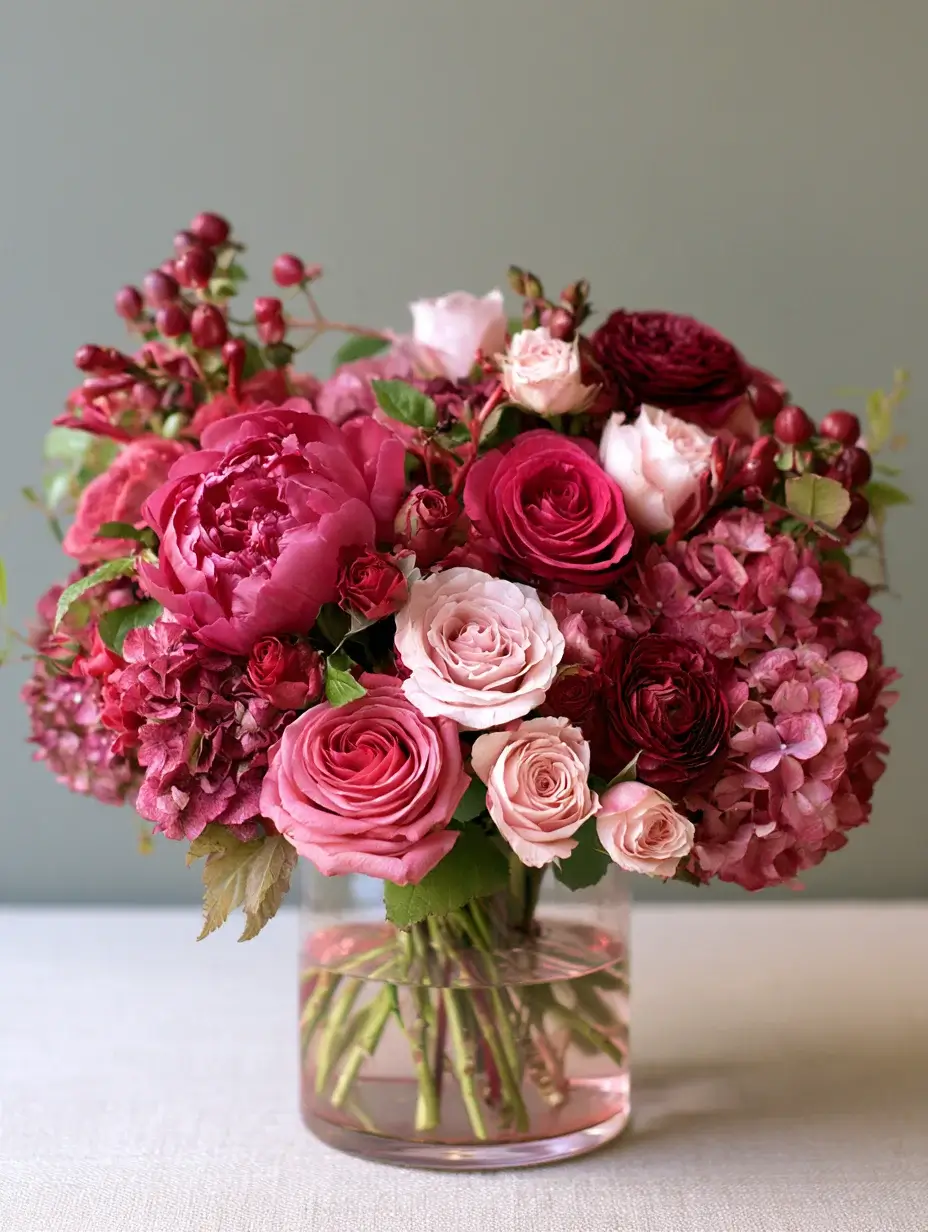
Color choices determine whether your companion blooms blend seamlessly or stand apart with striking intention.
- Harmonious & Romantic: A palette of blush, cream, and soft peach creates a dreamy, unified arrangement, especially when tones vary gently rather than matching exactly.
- Deliberate Contrast: Pair pale peonies with burgundy, plum, or deep purple accents. Use these darker flowers sparingly so they punctuate the design rather than overpower it.
- Bloom Size Matters: Large roses can support peonies, but too many similarly sized, full flowers will make the arrangement feel crowded. Rely on smaller sweet peas, tulips, or anemones to provide visual relief and definition.
The Art of Greenery and Filler Flowers
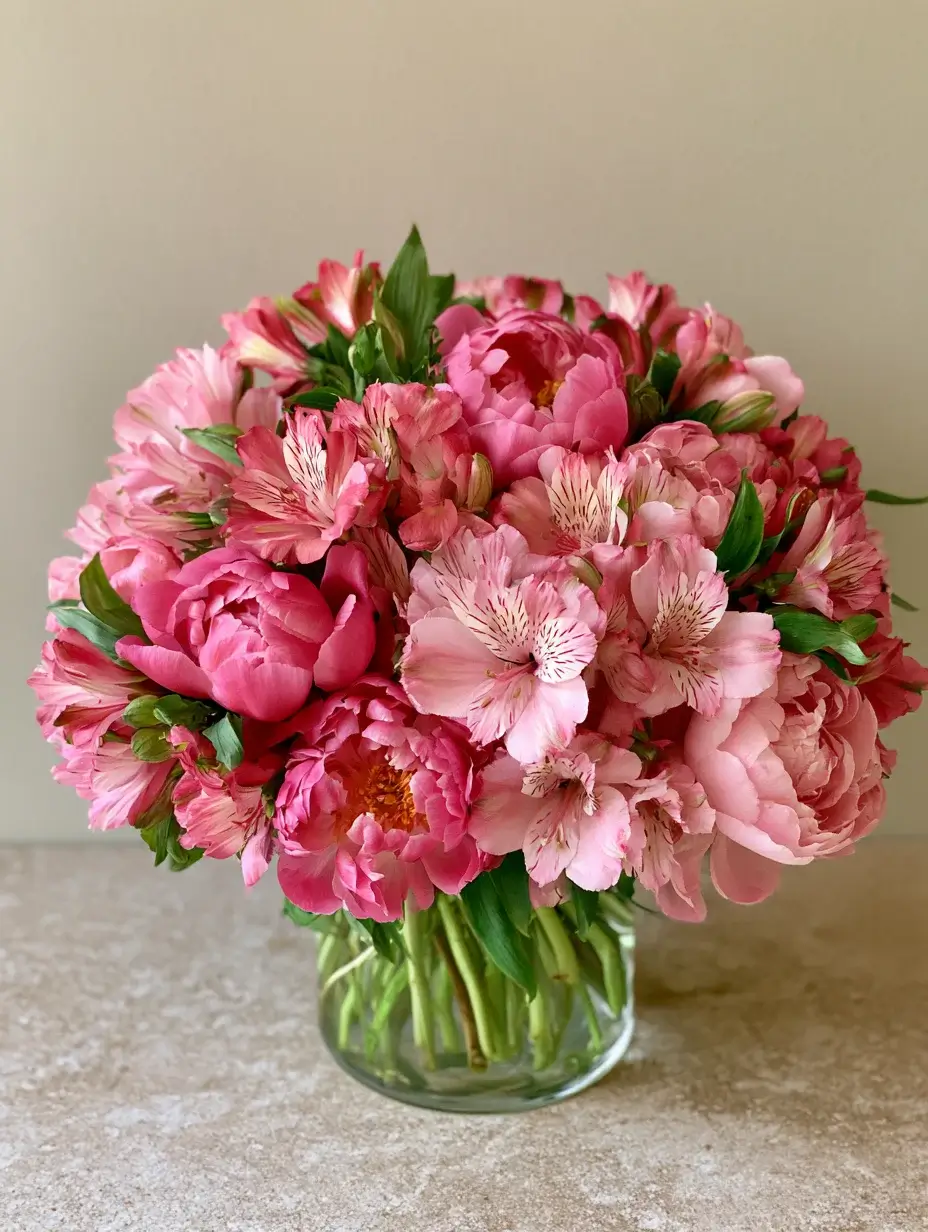
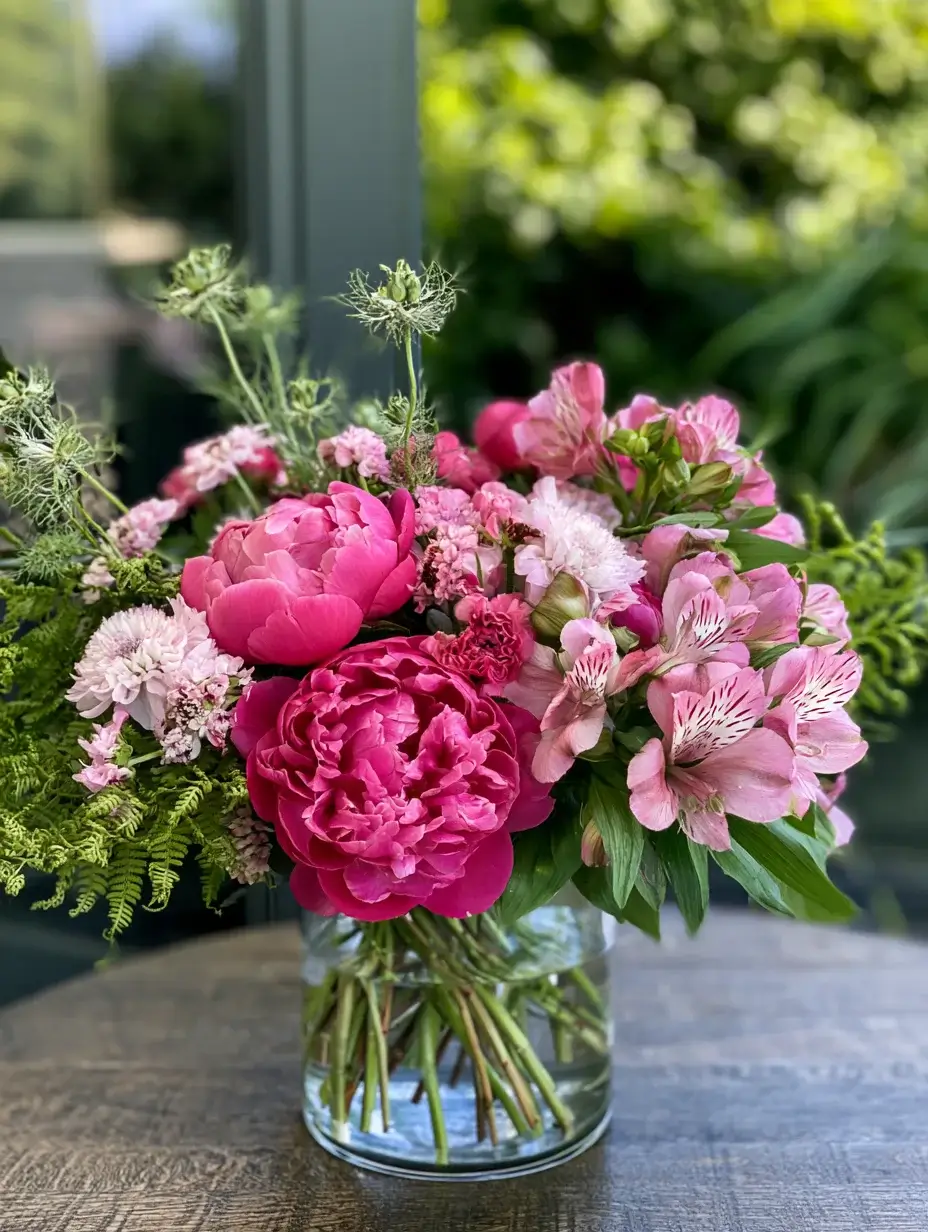
Because a group of peonies can quickly read as one dense mass of color, greenery is essential. It introduces contrast and gives the arrangement a visible, elegant framework.
Best Greenery for Peonies
- Eucalyptus: Offers soft, rounded leaves and gentle, cascading movement.
- Ruscus: Contributes cleaner lines and a more defined, structured silhouette.
- Olive Branches: Bring slender, silvery foliage for a rustic yet refined feel.
- Fern: Adds fine, feathery texture that softens the overall look.
Airy Fillers for Visual Pauses
Smaller flowers help create visual breathing room between large peony heads:
- Waxflower: Supplies tiny blossoms along delicate, branching stems.
- Baby’s Breath: Creates a light, cloudlike, romantic effect.
- Astrantia: Adds intricate, star-shaped details that lend texture at close range.
🌟 Pro Design Tip: Use foliage and fillers sparingly. Leaves should support and frame the peonies, not hide their distinctive forms. Preserving open space allows individual peonies to remain legible and keeps the design from feeling overly formal or crowded.
Step-by-Step: How to Arrange a Stunning Peony Bouquet
- Anchor with Peonies: Begin by choosing the peonies that will anchor the arrangement. Place a few at different points rather than lining them up at the same height. Turn each flower to show its best side, leaving space around the largest heads.
- Add Companion Flowers: Introduce contrasting forms. Slender spikes, delicate sprays, or flat-faced blooms can balance the peonies’ full shape. Group similar flowers in small clusters, repeating each variety in one or two places to create a deliberate, cohesive rhythm.
- Establish the Outline: Use foliage to extend slightly beyond the blooms, softening the edges and providing a green framework before filling every open space.
- Refine and Add Depth: Trim stems to varying lengths so some blooms sit forward and others rise behind them. Step back periodically, turn the vessel, and assess the outline from several angles to ensure a graceful, open silhouette.
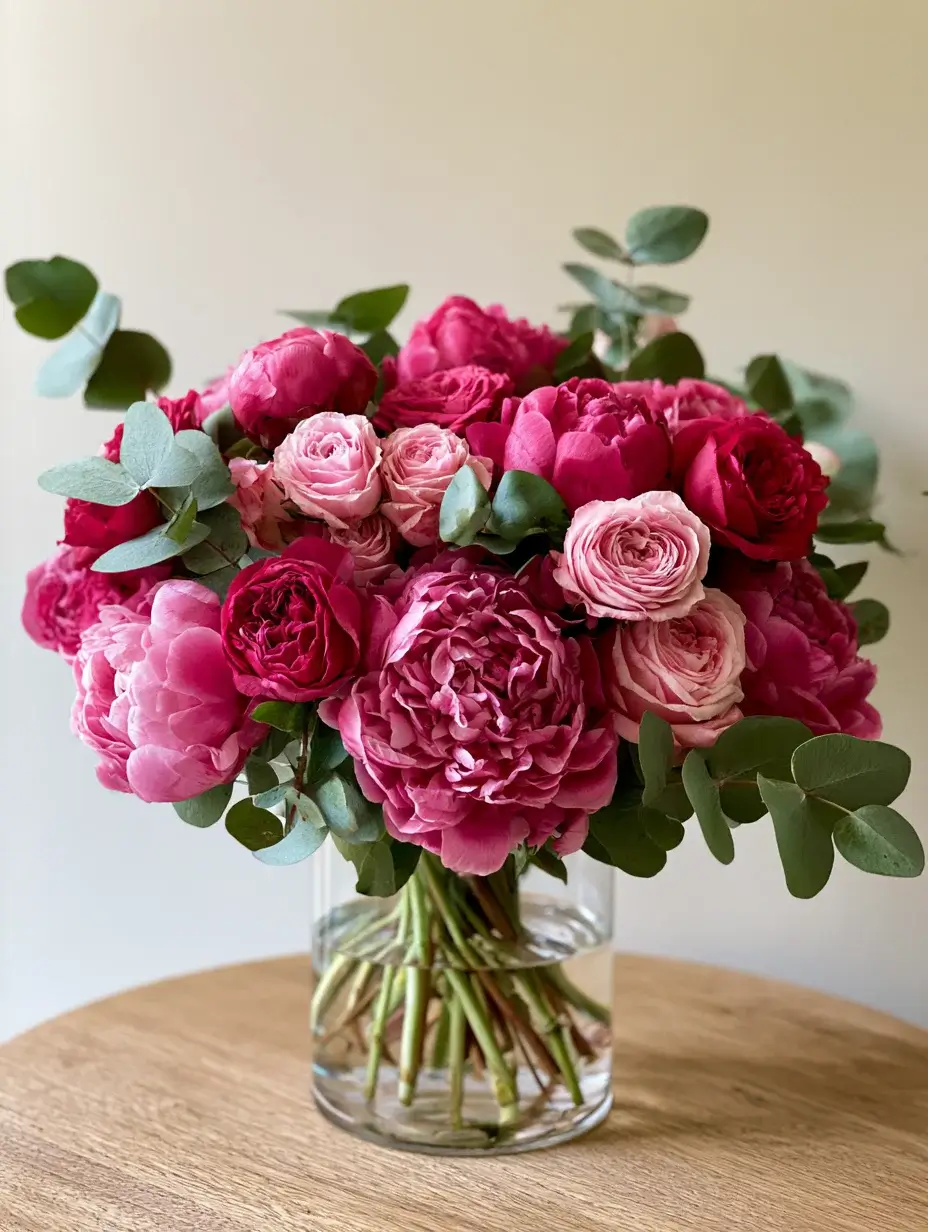
Essential Peony Bouquet Care Tips
To keep your mixed, high-end bouquet looking fresh and vibrant for as long as possible, follow these simple care steps:
- Start Clean: Always begin with a meticulously clean vessel and fresh, room-temperature water.
- Prep the Stems: Remove any leaves that would sit below the waterline to prevent bacterial growth. Recut the stems at a 45-degree angle before arranging.
- Control the Environment: Keep the flowers away from direct sunlight, heating vents, and ripening fruit, all of which can drastically shorten their display life.
- Maintain Regularly: Companion flowers may fade sooner than hardy peonies. Check the bouquet daily, remove any declining stems immediately, and refresh the water every 1–2 days.