
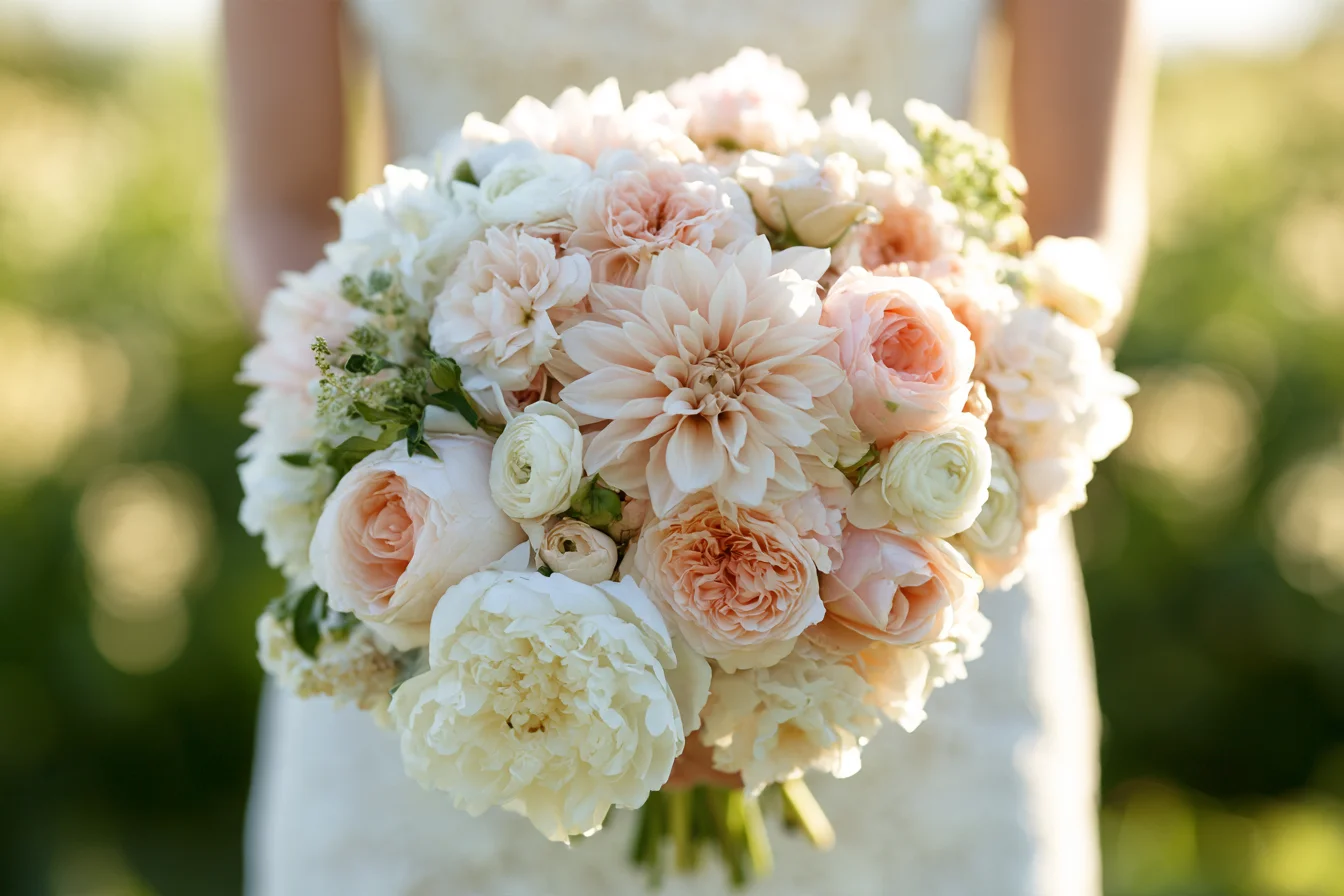

Outdoor ceremonies in Coral Springs and throughout South Florida create floral conditions that differ considerably from climate-controlled indoor venues. Intense sunlight warms petals and foliage quickly, high temperatures accelerate water loss, and humidity can soften leaves and encourage fungal problems. Sudden rain may bruise petals, wind can bend stems and scatter delicate blooms, and warm surfaces such as concrete, stone, and sand radiate additional heat into nearby containers.
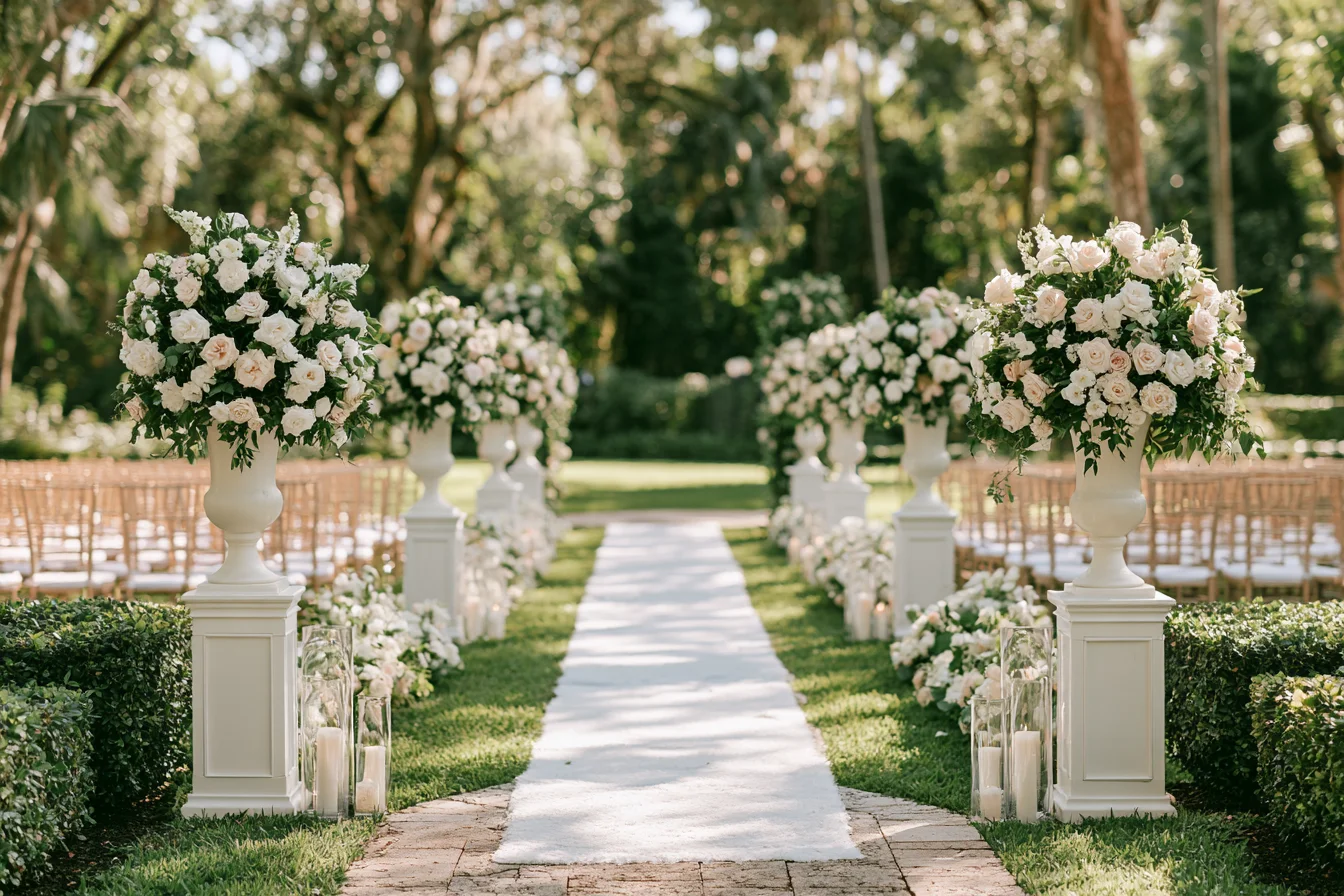
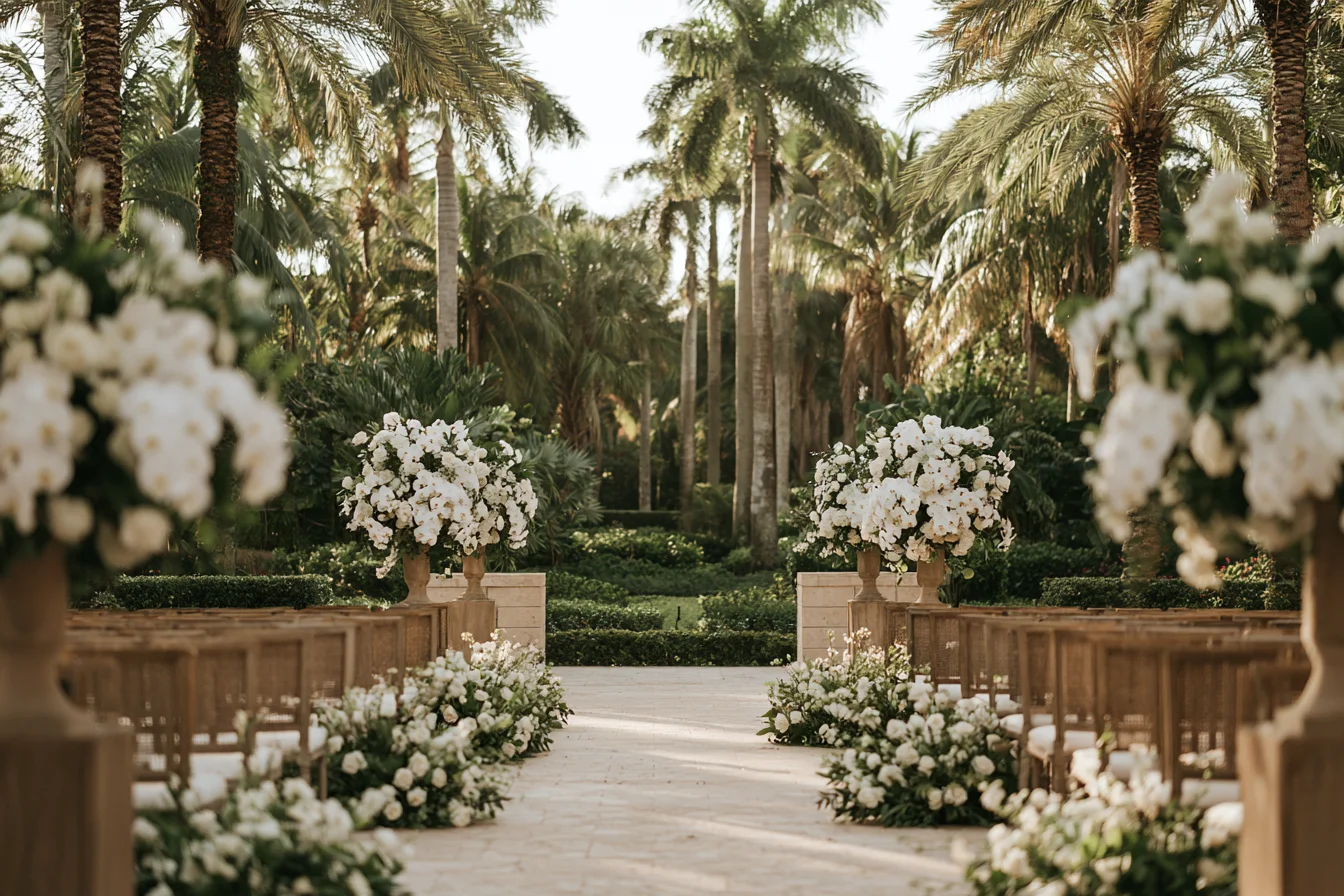
Recognizing Heat Stress Early
Heat stress often appears before flowers visibly collapse. Watch for these warning signs:
- Drooping stems and a generally wilted appearance
- Browning or translucent petal edges
- Softened leaves
- Blooms that open too rapidly, shortening their vase life
Delicate varieties may look attractive during setup but deteriorate within a few hours in direct afternoon sun or reflected heat. These changes can affect photographs, guest-facing décor, and the continuity between ceremony and reception.
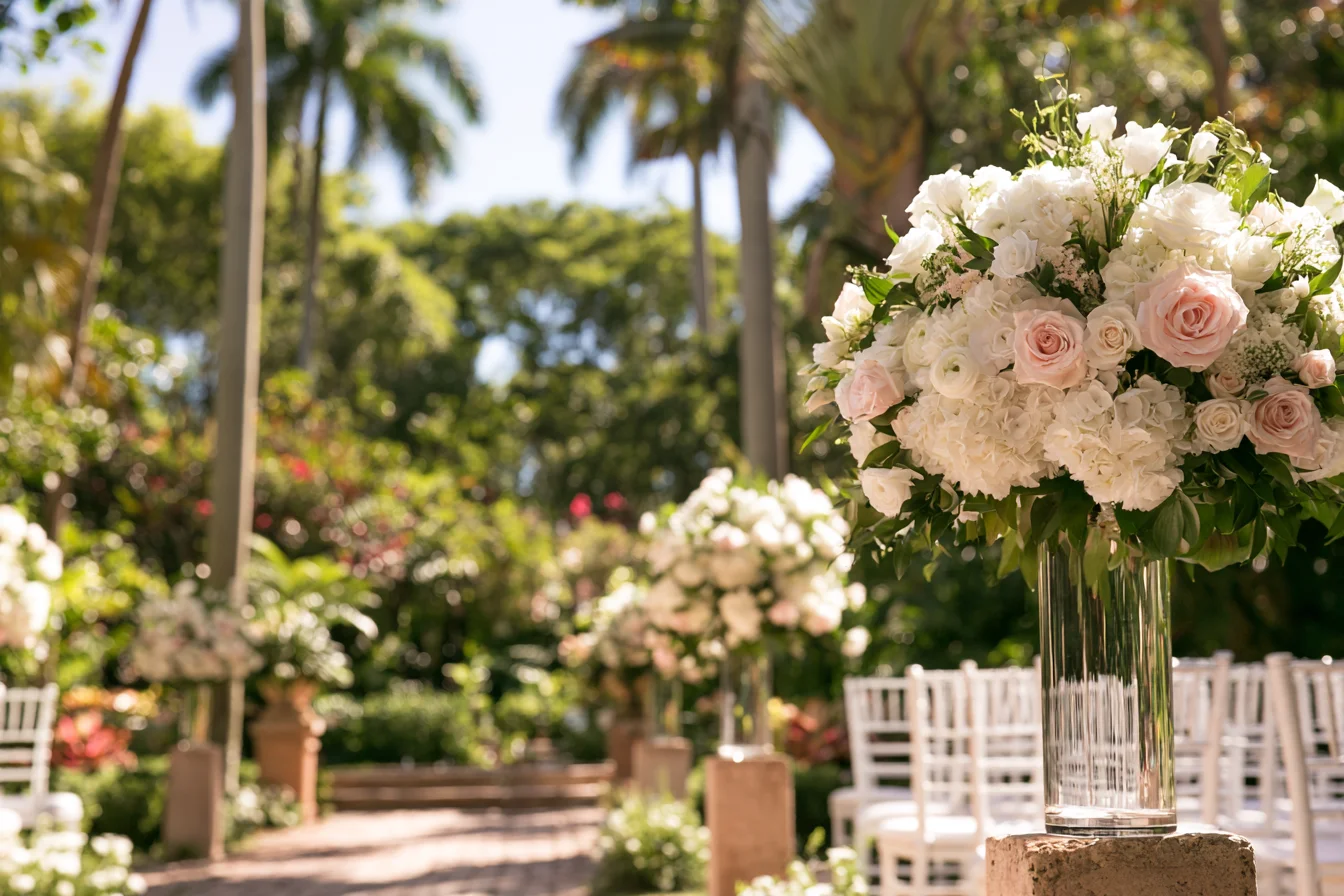
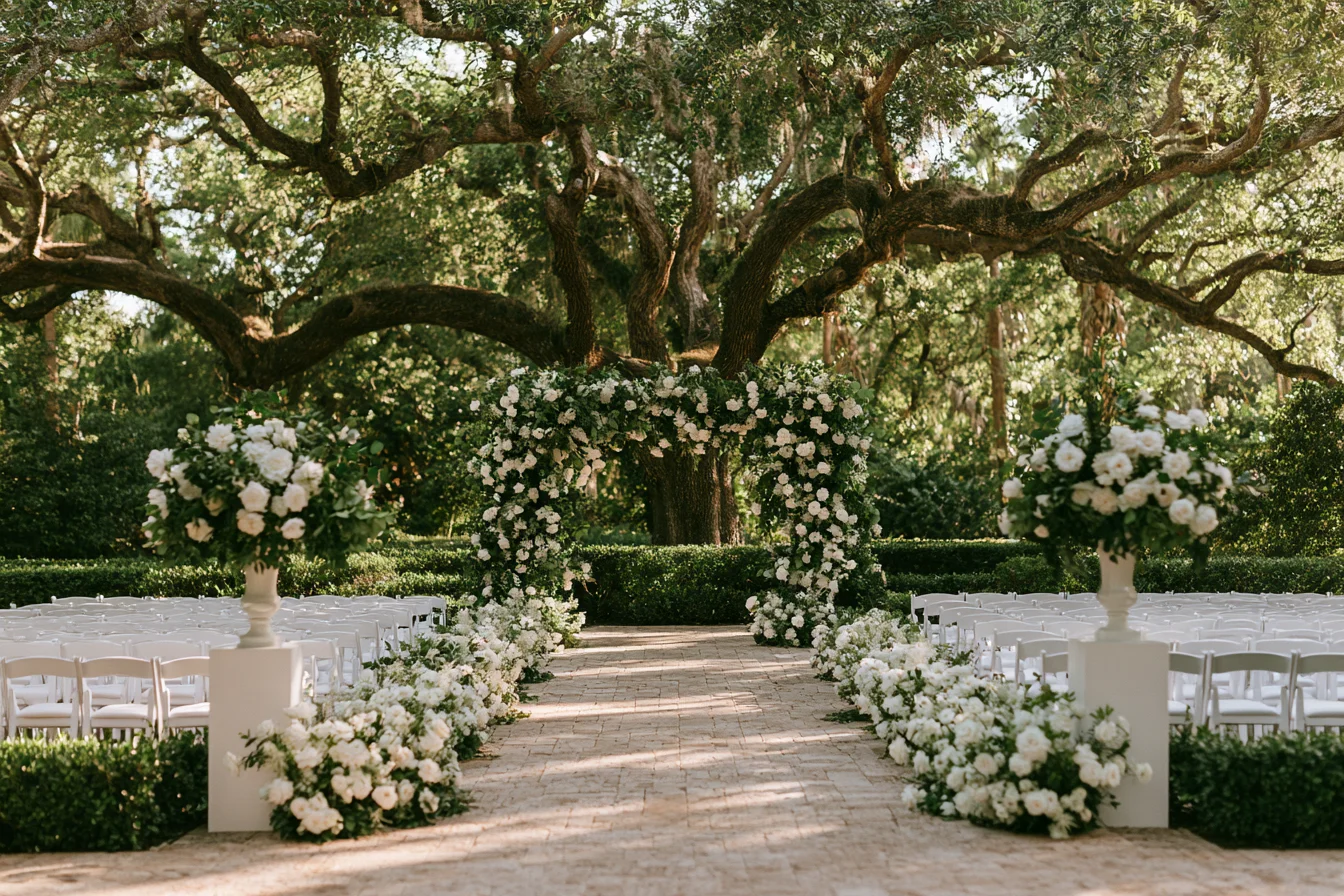
Selection Criteria for Ceremony Flowers
When selecting ceremony flowers, look beyond appearance and color:
- Strong stems with structural strength
- Thick or naturally waxy petals
- Proven tolerance for warm conditions
- Reliable hydration that keeps blooms attractive for several hours
Even resilient varieties require professional preparation. Proper conditioning, clean hydration, protective shade, suitable transport, and secure installation all help flowers withstand the setting. Ceremony timing, the exact location, expected sun and wind exposure, nearby heat-reflective surfaces, and the broader décor plan should guide the design.
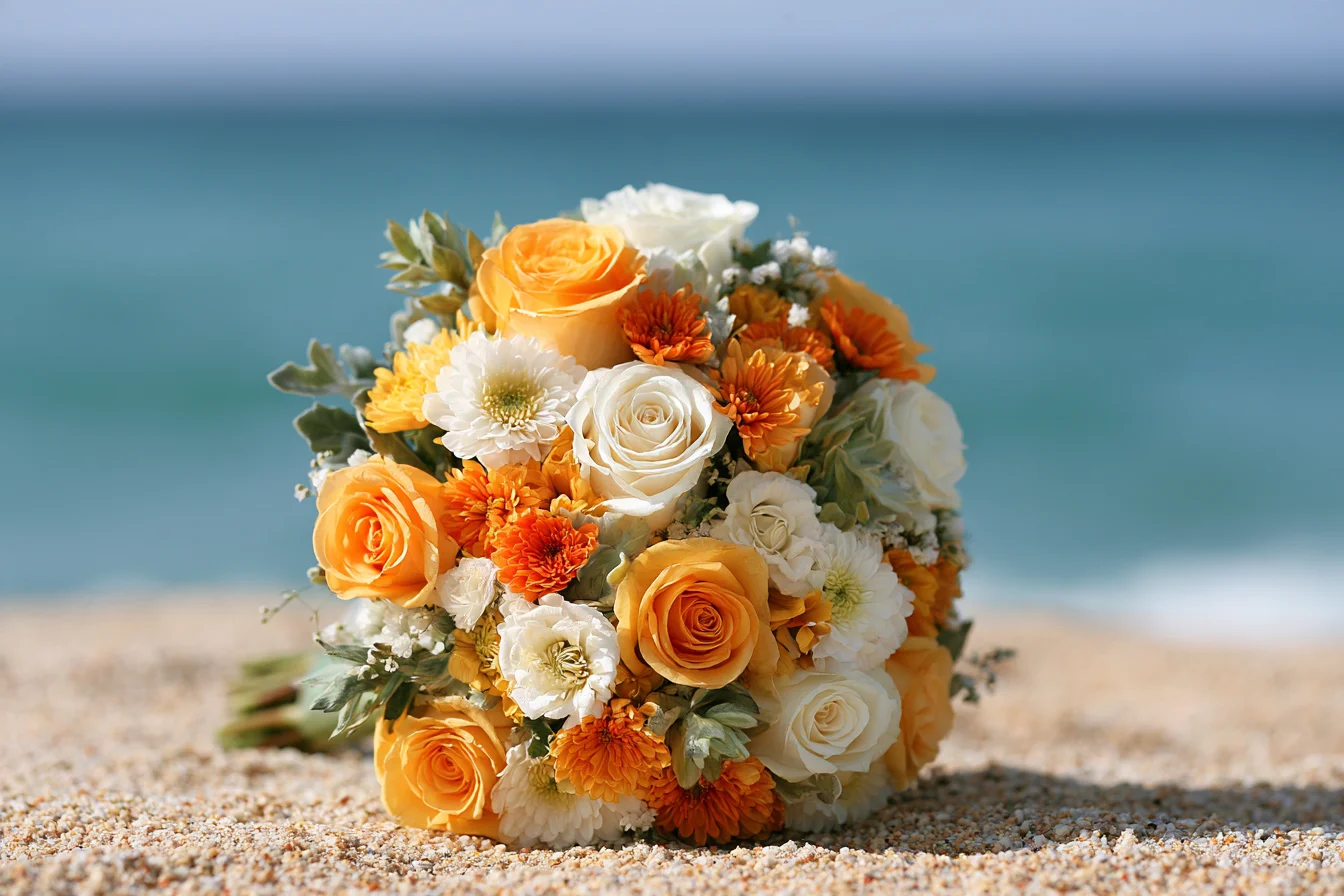
Best Flowers for South Florida Outdoor Weddings
Tropical Selections
Tropical flowers are natural choices for South Florida celebrations:
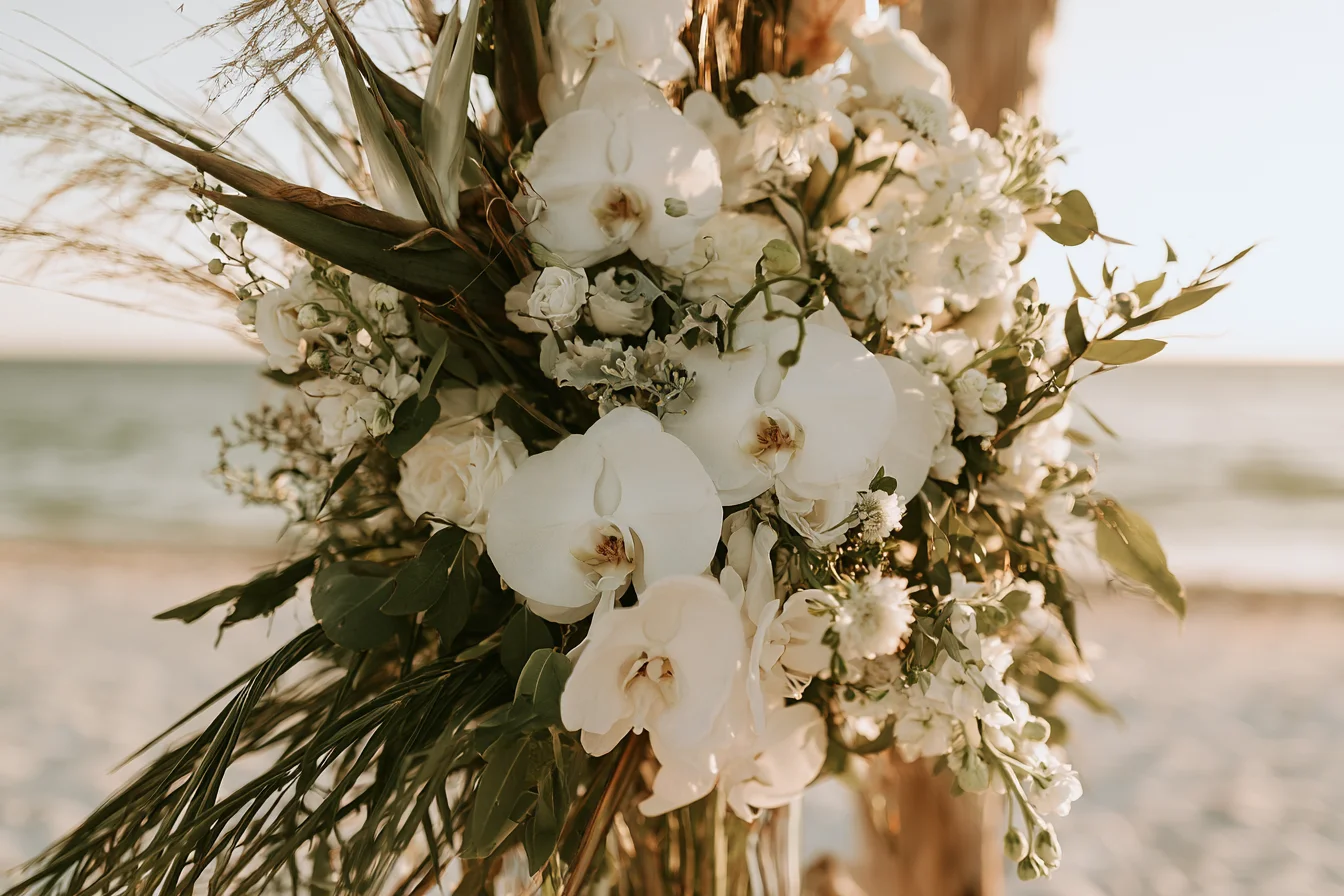
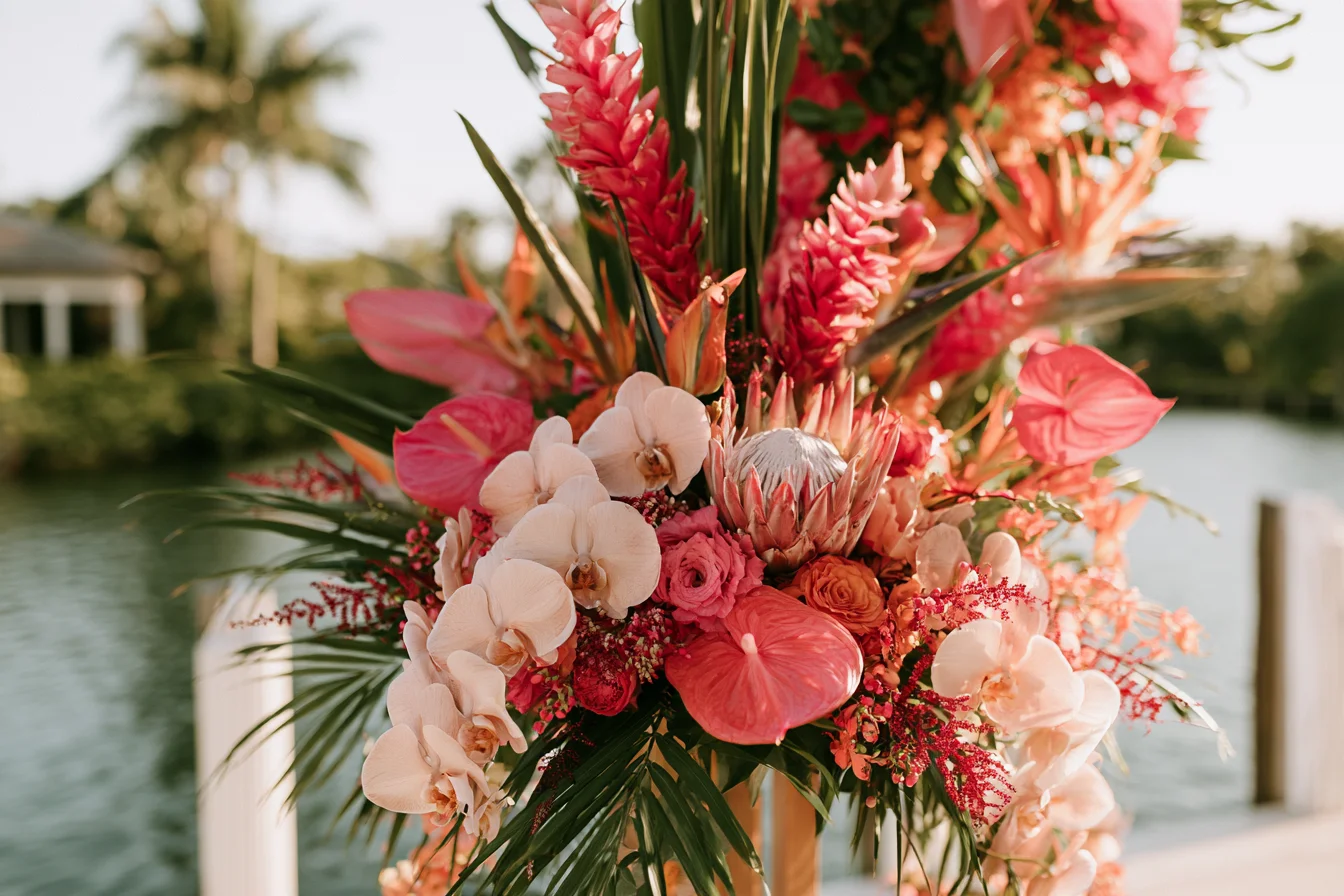
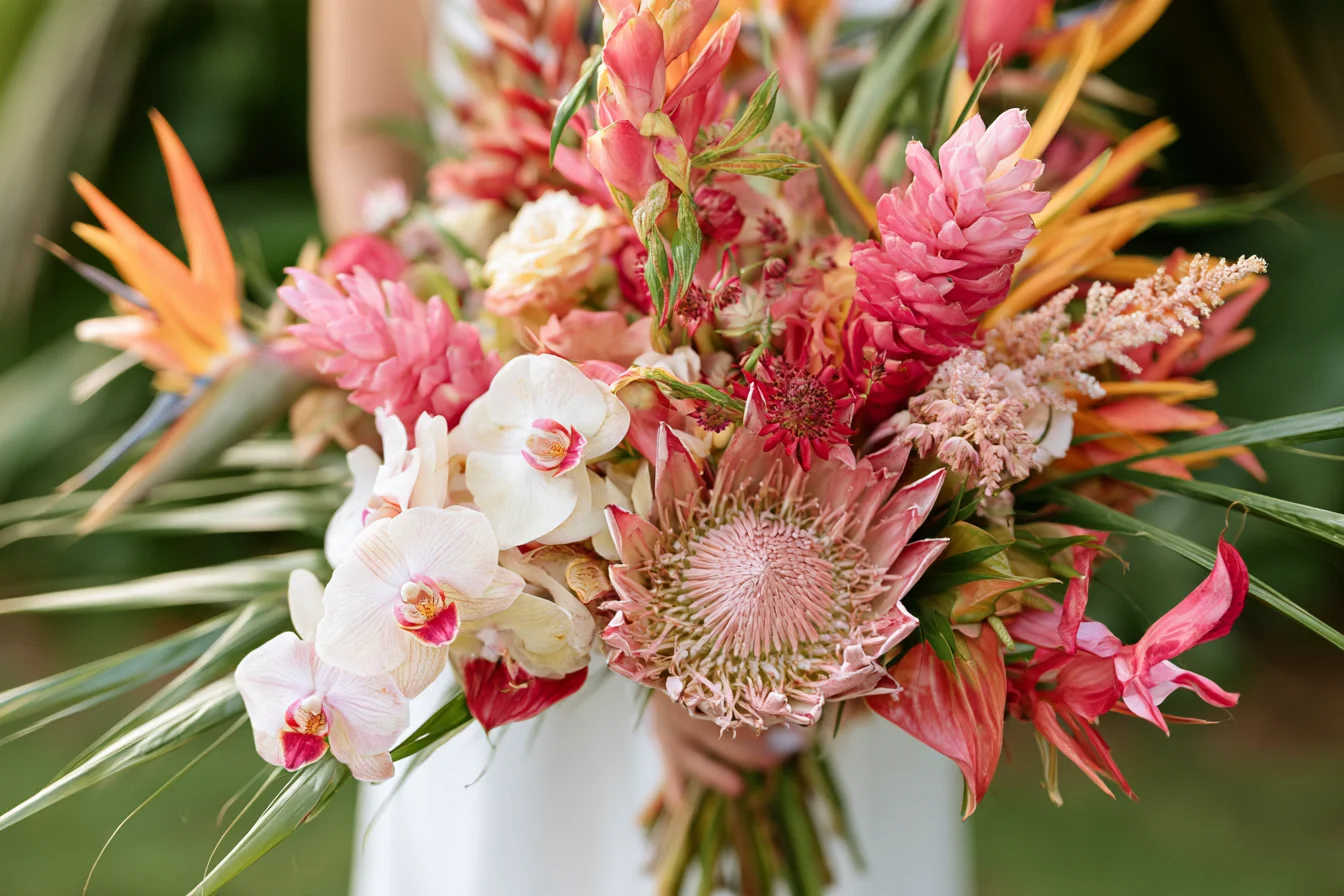
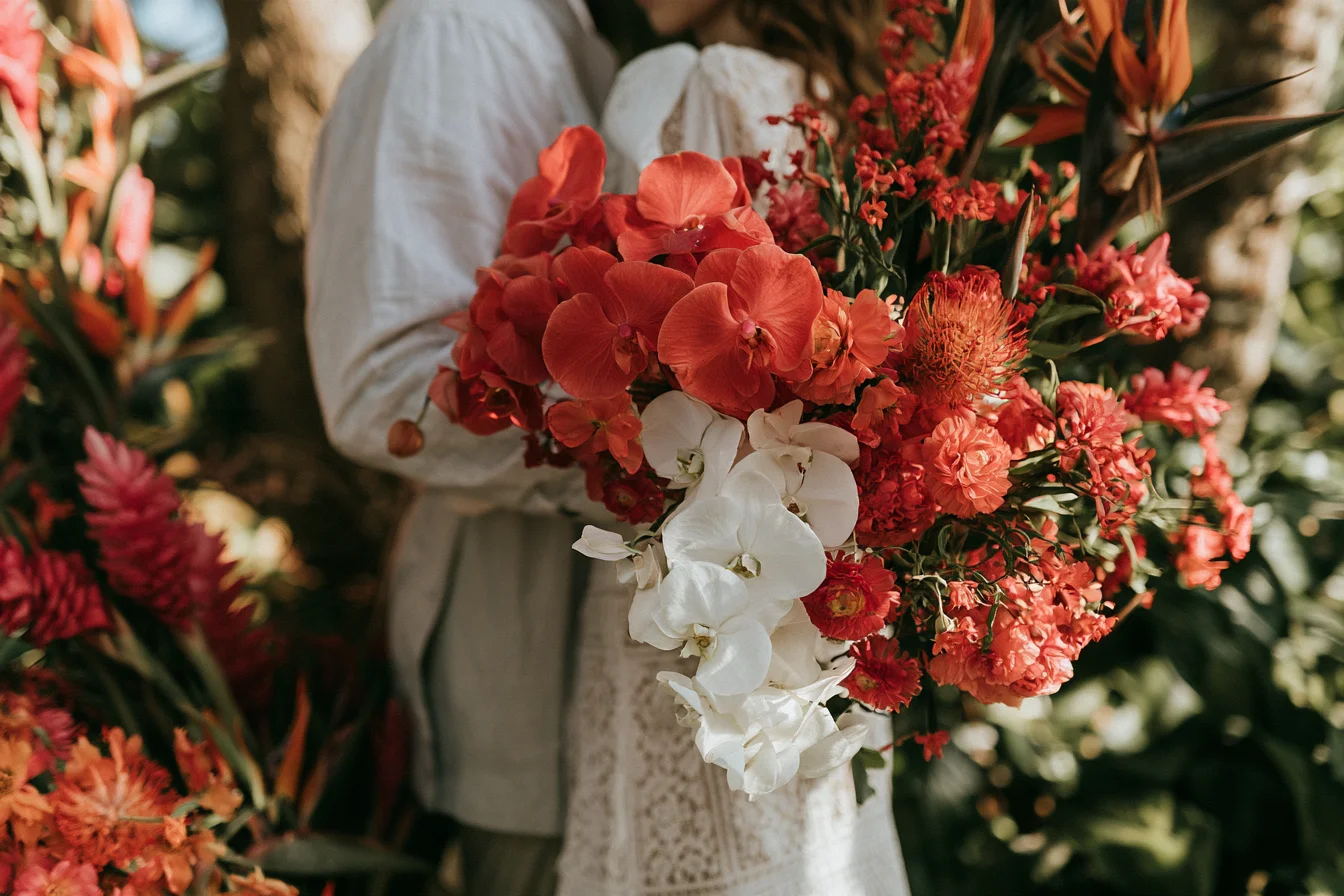
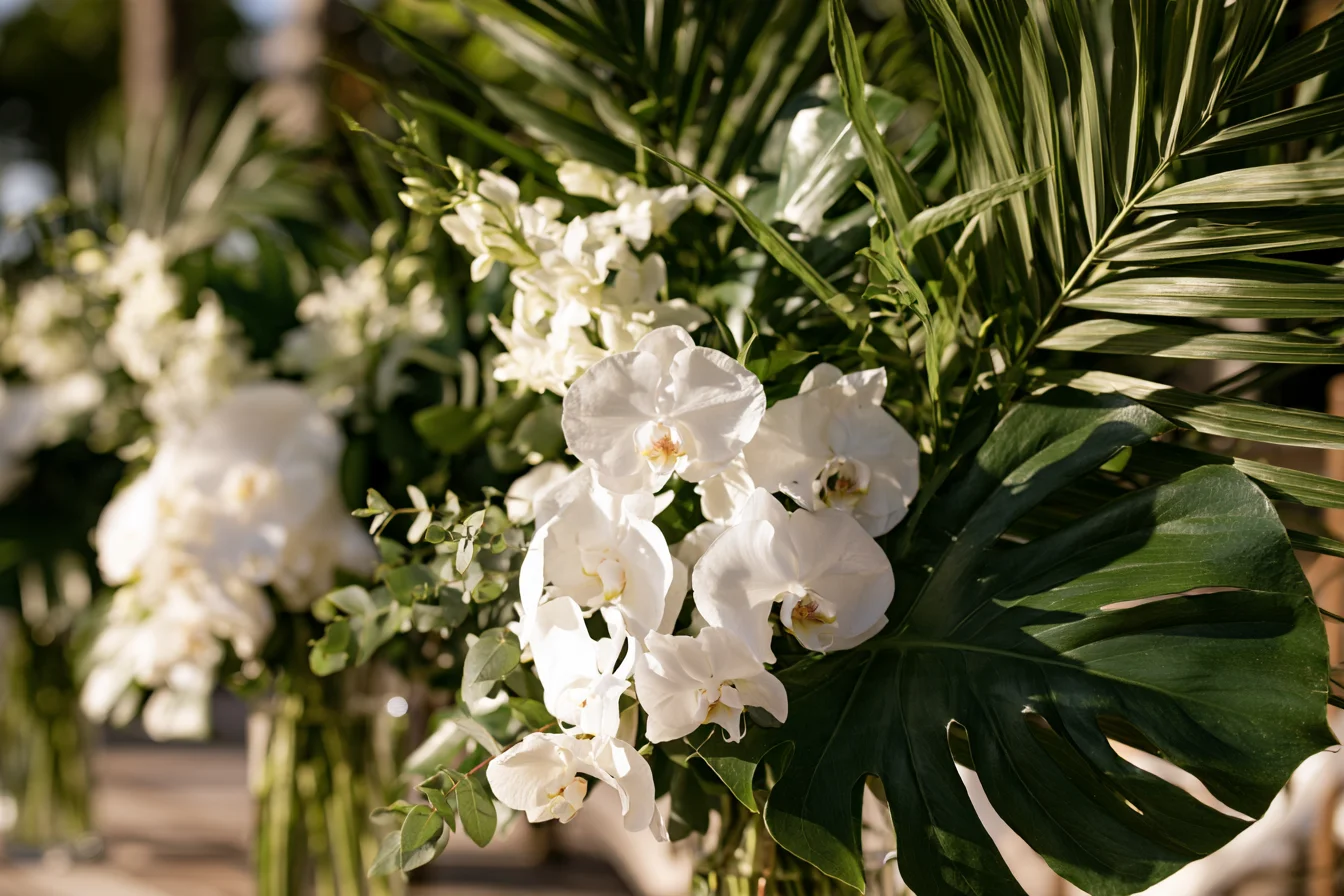
- Orchids: Refined elegance in white, blush, purple, yellow, and green; beautiful in bouquets, boutonnieres, and protected altar designs.
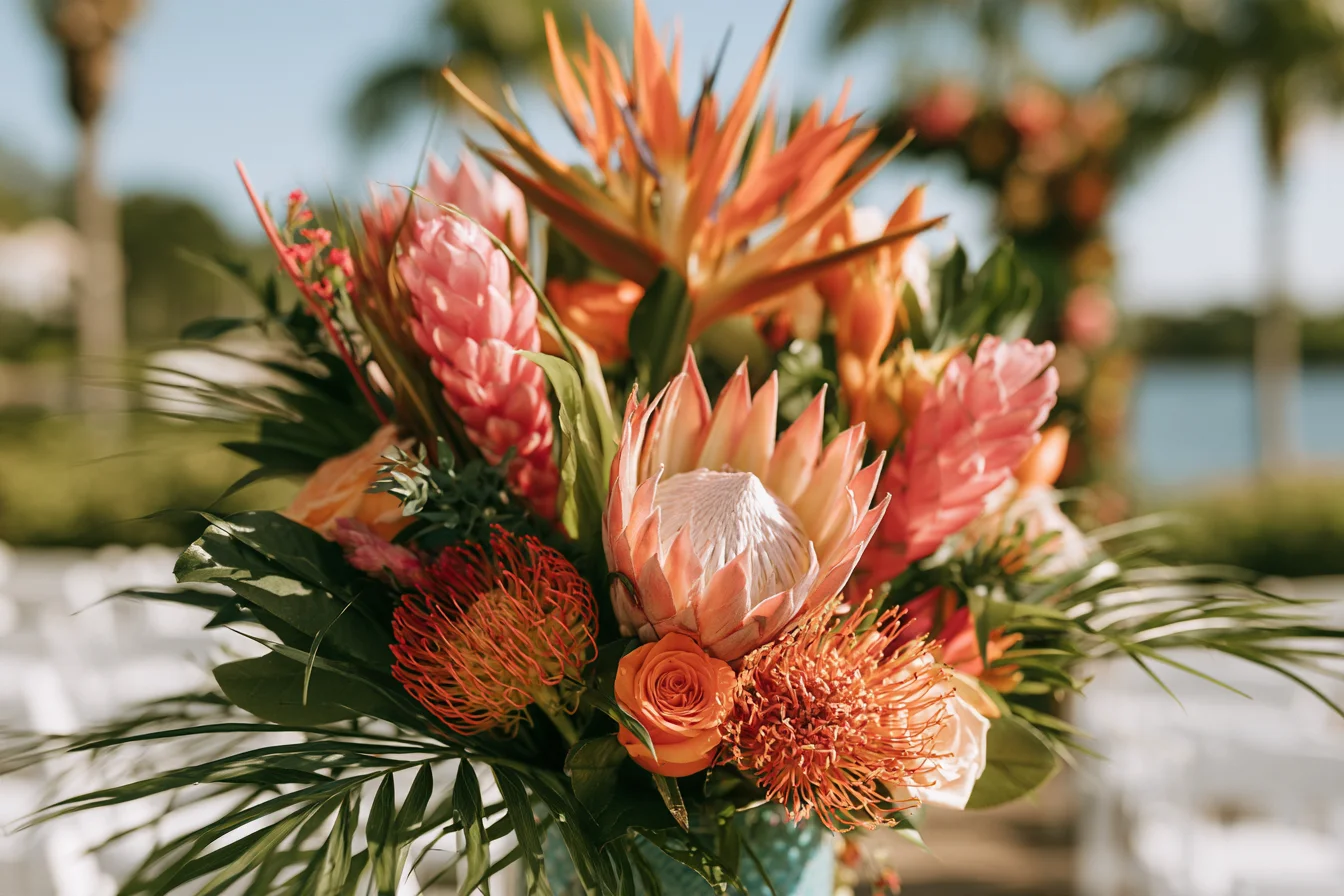
- Anthuriums: A modern, sculptural personality in red, pink, white, orange, and green.
- Birds of Paradise: Dramatic height for arches and asymmetrical installations.
- Ginger and Heliconias: Vivid pink, red, orange, and yellow tones with sturdy stems suited to tropical or resort-style arrangements.
- Protea: A bold, textural focal point in neutral, blush, burgundy, and coral shades; effective in bouquets, aisle groupings, and statement altar pieces.
Reliable Garden Flowers
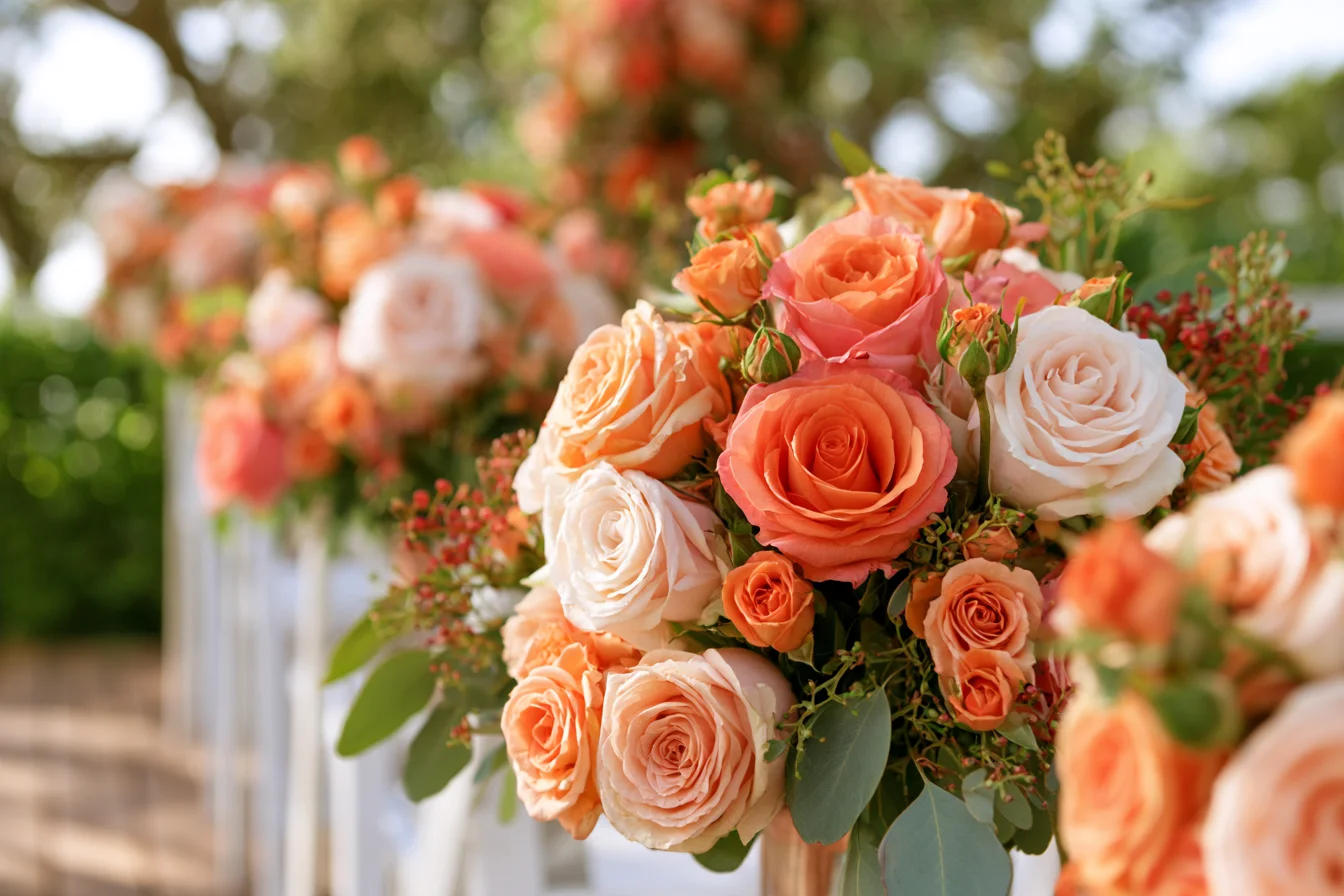
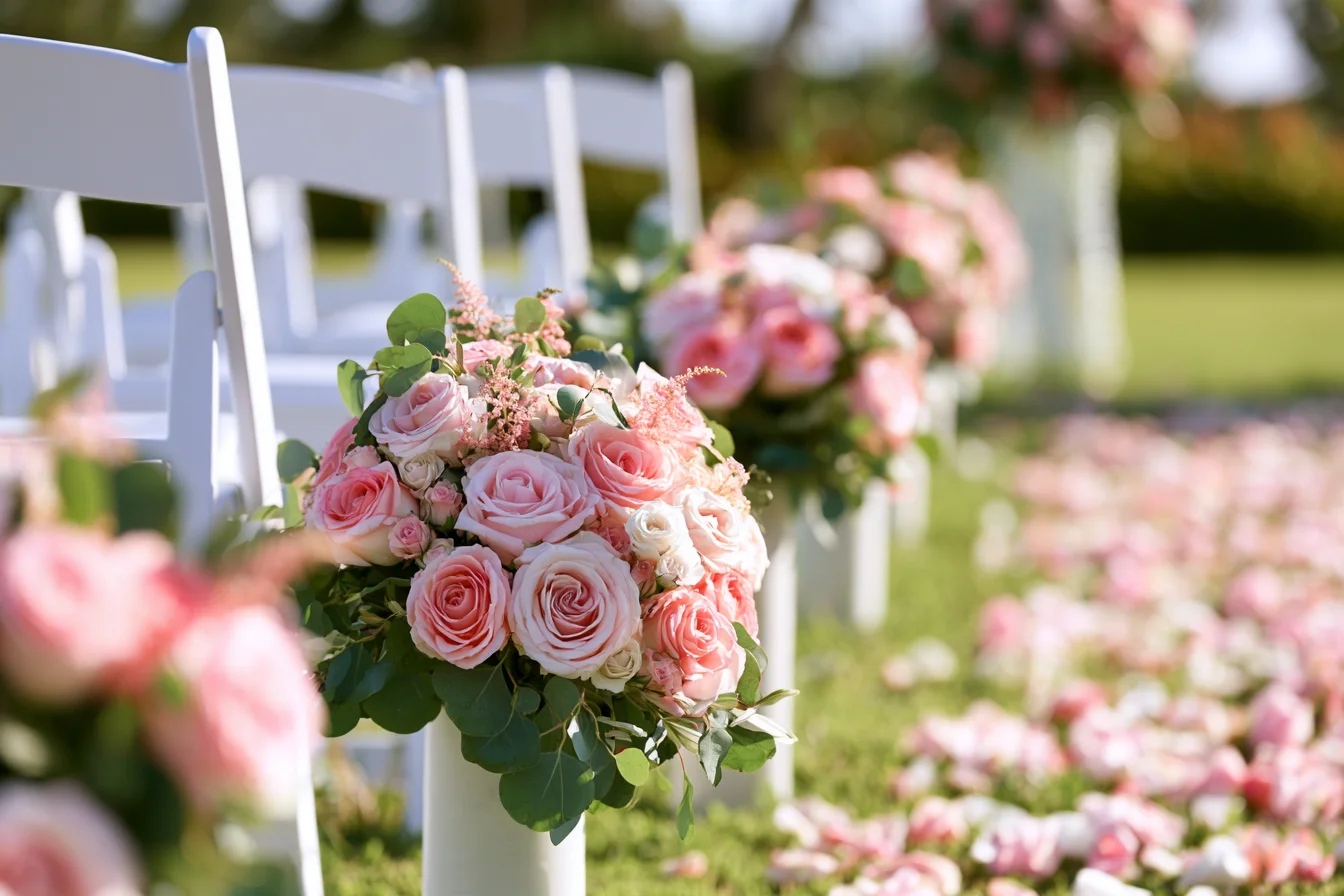
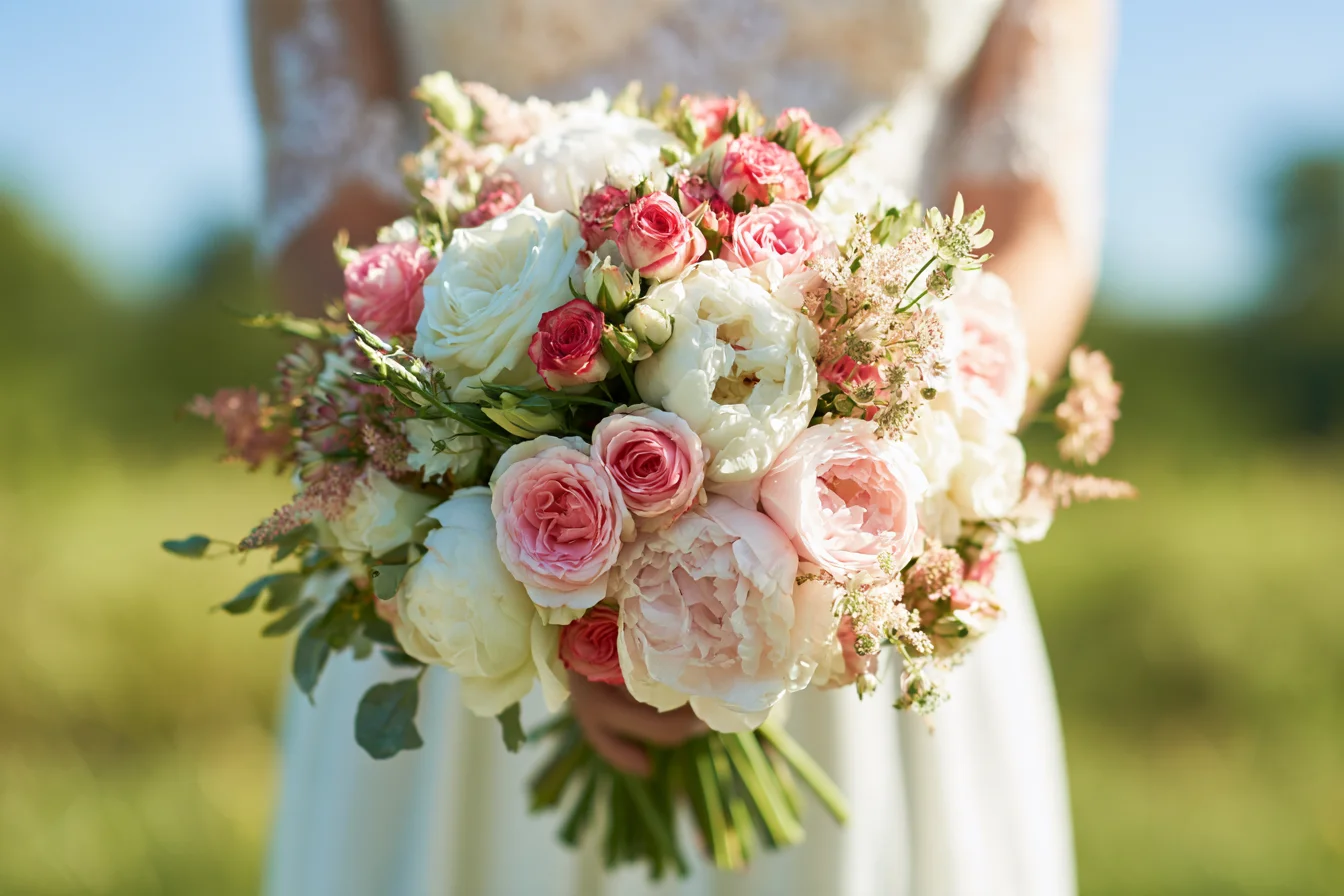
- Roses: Versatile for romantic arches, bouquets, chair clusters, and boutonnieres, with extensive color options.
- Lisianthus: A delicate, rose-like appearance for bouquets and sheltered ceremony details.
- Zinnias and Sunflowers: Cheerful color and a relaxed garden personality, particularly for aisle arrangements and outdoor altar designs.
- Alstroemeria, Chrysanthemums, and sturdy Carnations: Dependable volume in many colors, although performance depends on variety, freshness, hydration, and professional care.
Heat-Tolerant Foliage
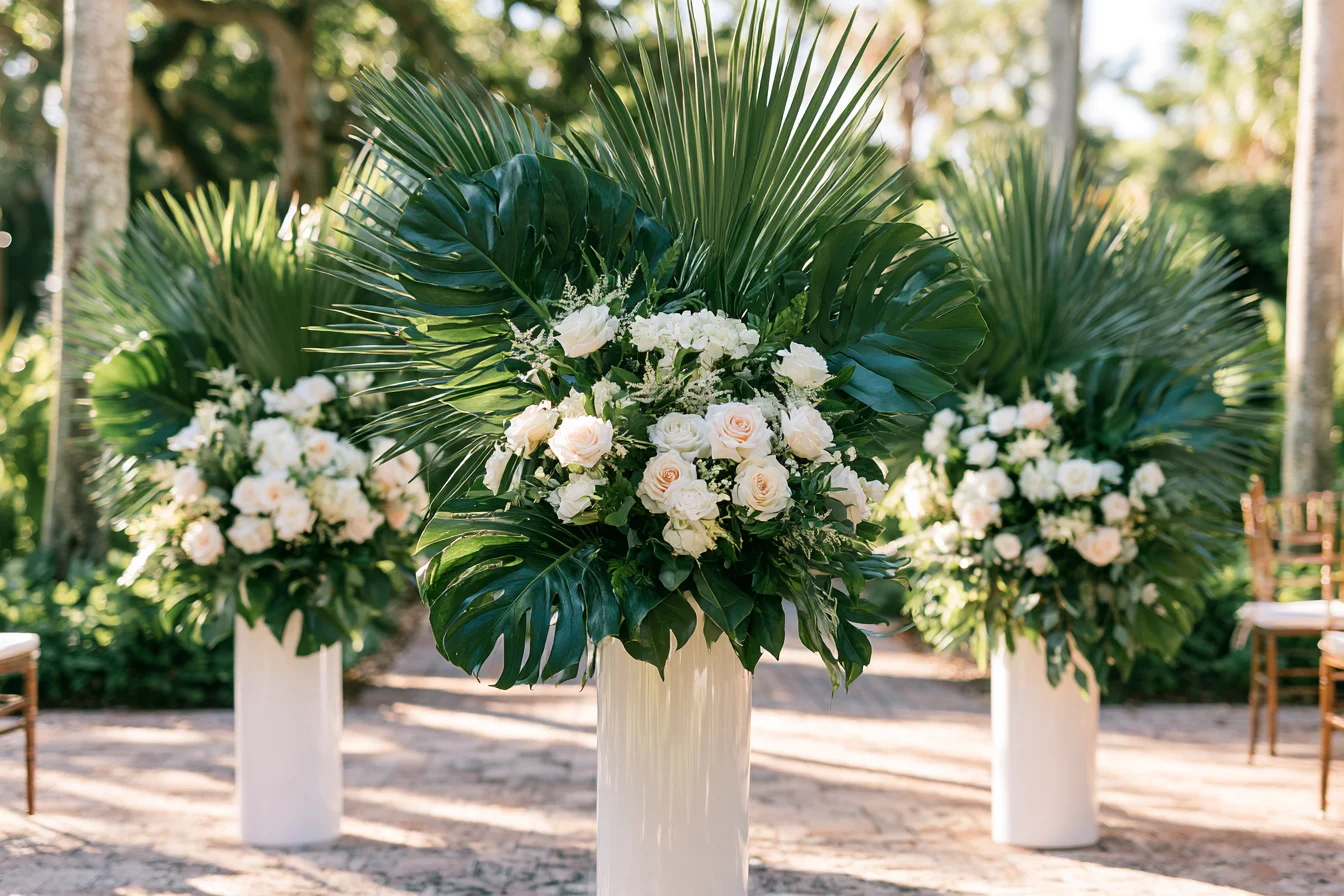
- Palm leaves and Monstera: Suited to tropical arches and aisle arrangements.
- Aspidistra, Eucalyptus, and Ruscus: Clean lines for bouquets and chair décor.
- Magnolia leaves: Polished, deep-green contrast for altar pieces and boutonnieres.
Delicate flowers can still be included for texture or sentiment, but use them selectively, keep them hydrated, and position them away from direct sun rather than relying on them for large exposed installations.
Timing, Preparation, and Installation
Schedule Smart
- Hold the ceremony during the cooler part of the day, preferably morning or late afternoon, when sunlight and humidity are less intense.
- Place major arrangements under partial shade whenever possible, while keeping the setting visually open and comfortable for guests.
- Avoid direct afternoon sun, which accelerates wilting, fades delicate petals, and heats containers rapidly.
Prepare and Transport Properly
- Ask the florist to keep bouquets, boutonnieres, and completed arrangements in a climate-controlled space until needed.
- Use a shaded preparation area during loading and setup.
- Rely on clean water, professional hydration products, and properly conditioned stems to retain moisture.
- Transport bouquets in stable, upright containers that prevent crushing, tipping, and unnecessary movement; florists may use wrapped stems, water tubes, or discreet water sources.
Install with Secure Mechanics
- Use floral foam where appropriate, properly saturated and secured.
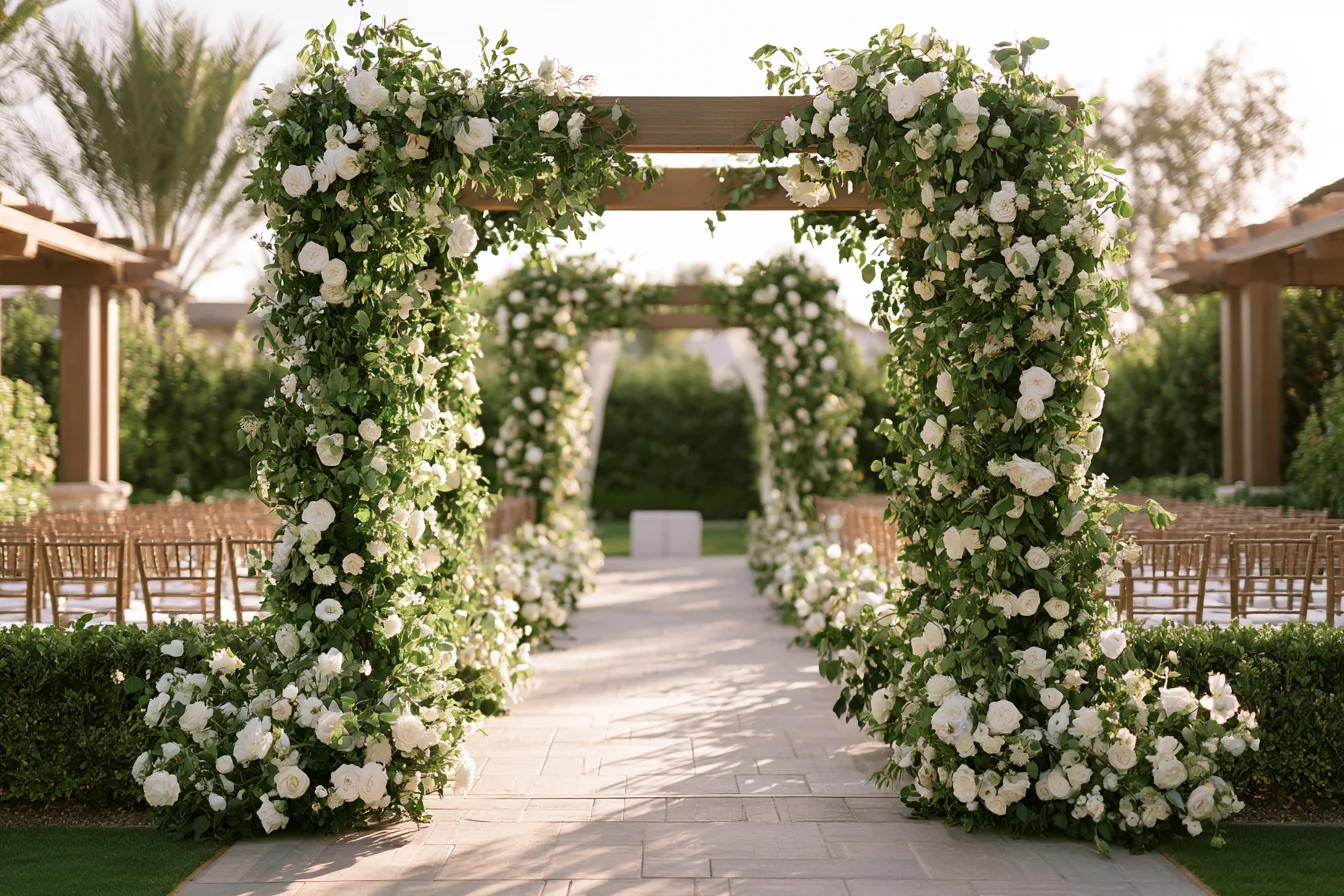
- Reinforce arches with floral wire, protective ties, and weighted bases.
- Anchor every installation for expected wind conditions without damaging the venue.
- Position aisle arrangements clear of movement, and keep containers away from hot floors, dark paving, and metal surfaces that transfer heat to stems.
Building a Weather Contingency Plan
- Reserve an indoor or covered location for rain and extreme heat.
- Choose arrangements that can be moved quickly if necessary.
- Keep spare blooms and extra water on hand, and use appropriate misting protocols; avoid excessive spraying in strong sun or when moisture could encourage damage.
- Establish a clear setup timeline covering delivery, conditioning, installation, inspection, and final placement.
- Schedule delivery and installation as close to the ceremony as practical, without compromising safe handling or design quality.
Design, Color, and Budget
A Balanced, Refined Look
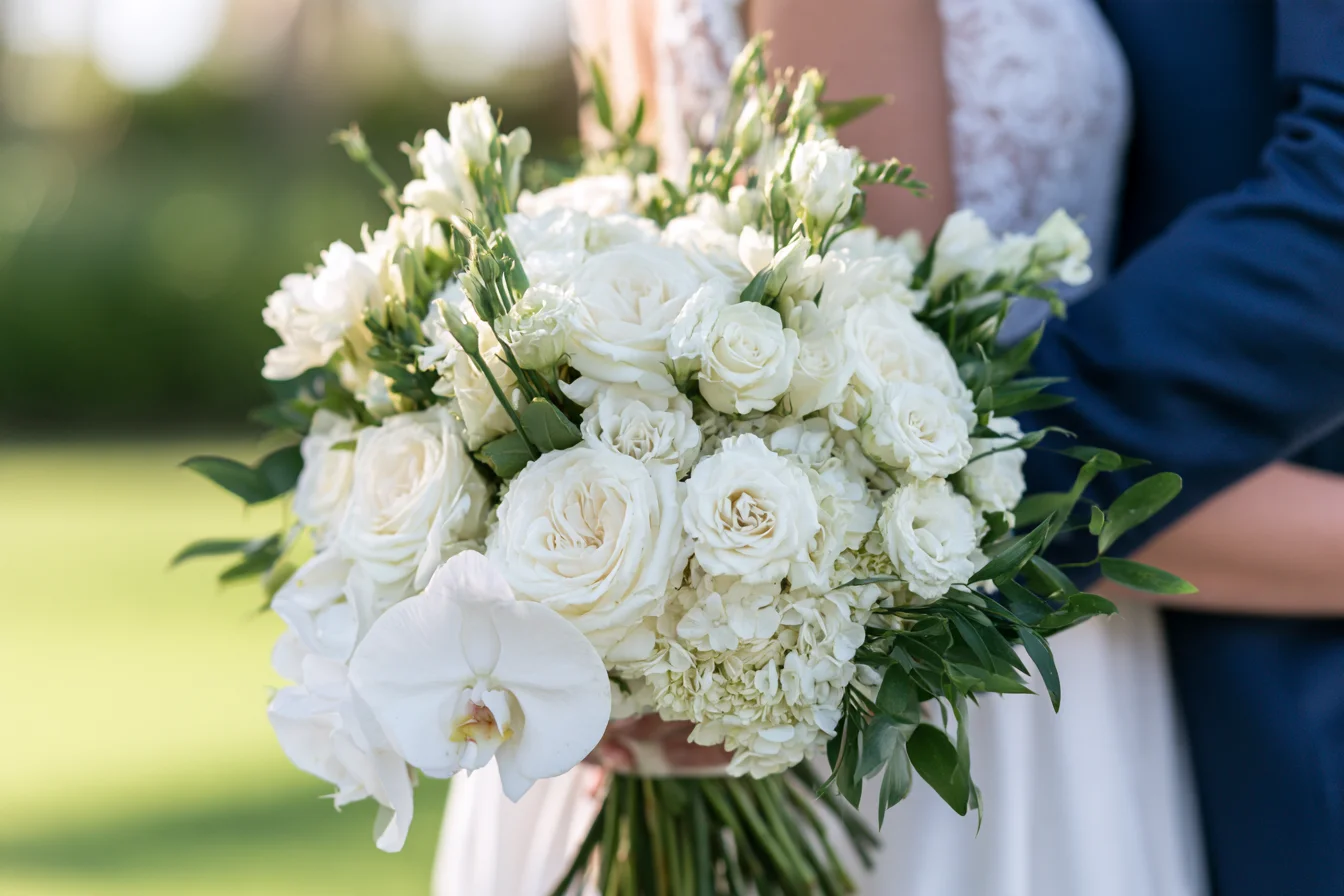
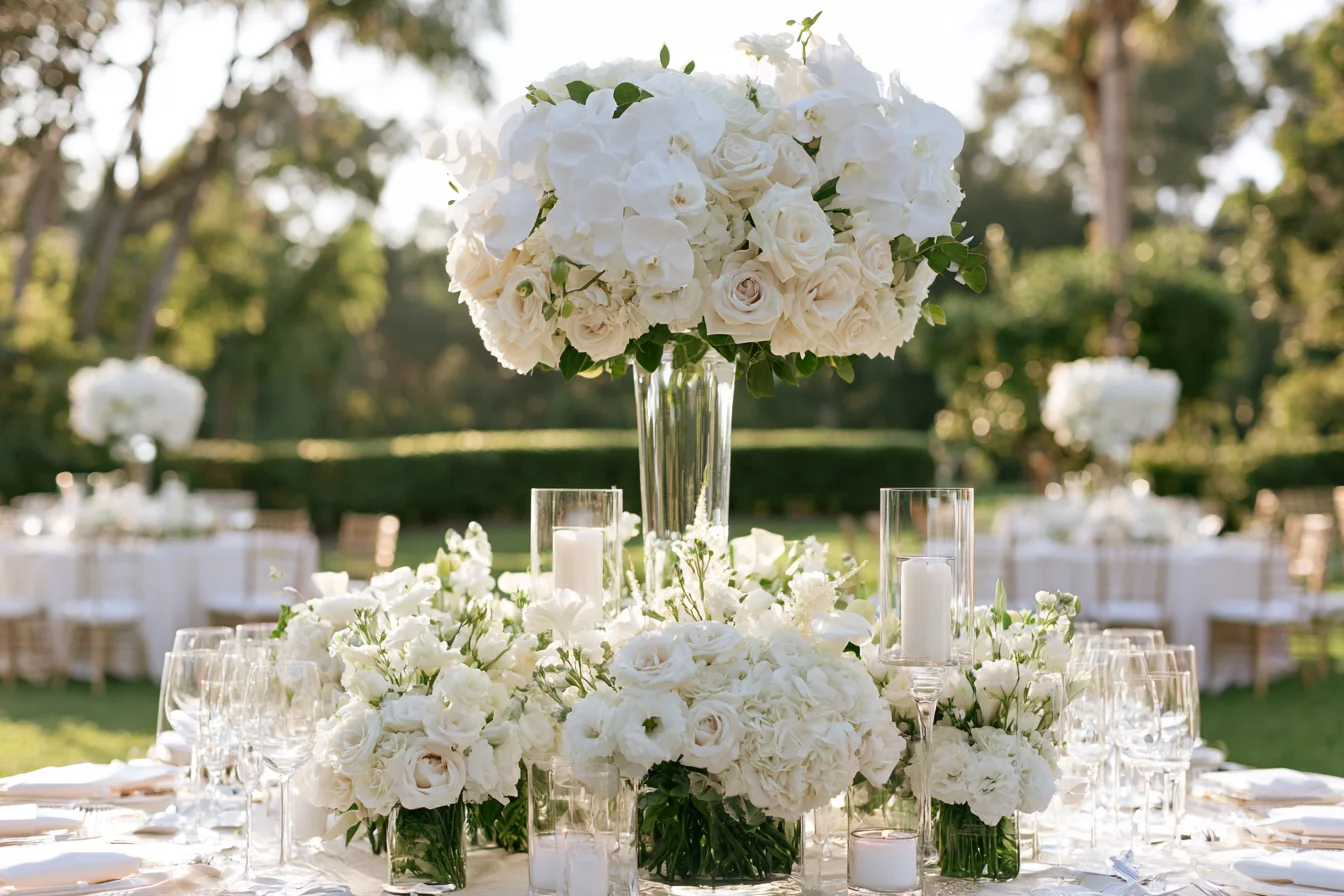
A durable floral design can remain refined without feeling excessively tropical:
- Combine architectural blooms such as orchids, anthuriums, or ginger with classics like roses, lisianthus, or hydrangeas.
- Use textured greenery, including palms, eucalyptus, ruscus, or local foliage, for structure while neutral flowers soften stronger shapes and colors.
- Add seasonal, locally sourced accents for a natural Coral Springs connection; these often withstand regional conditions better than delicate imported varieties.
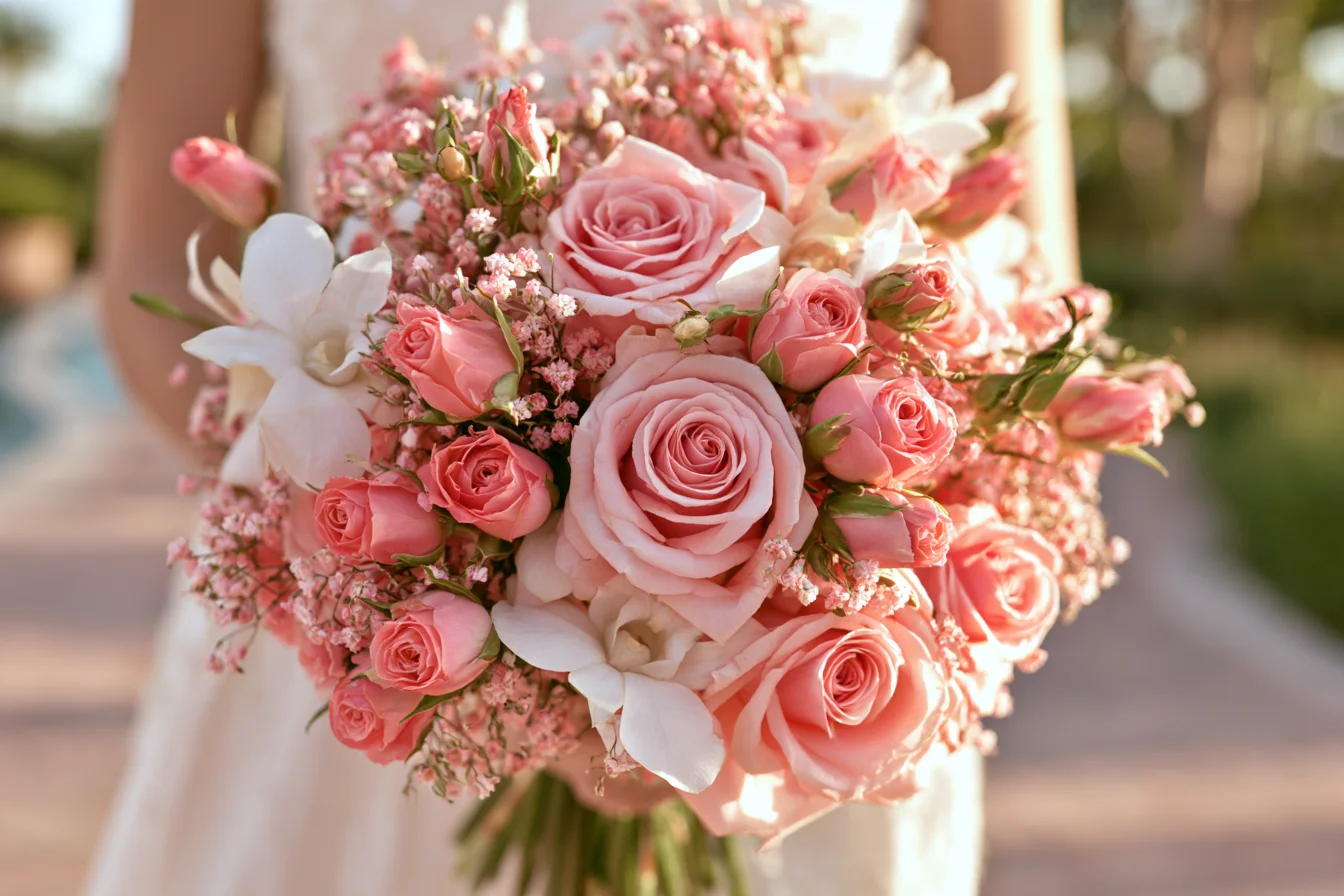
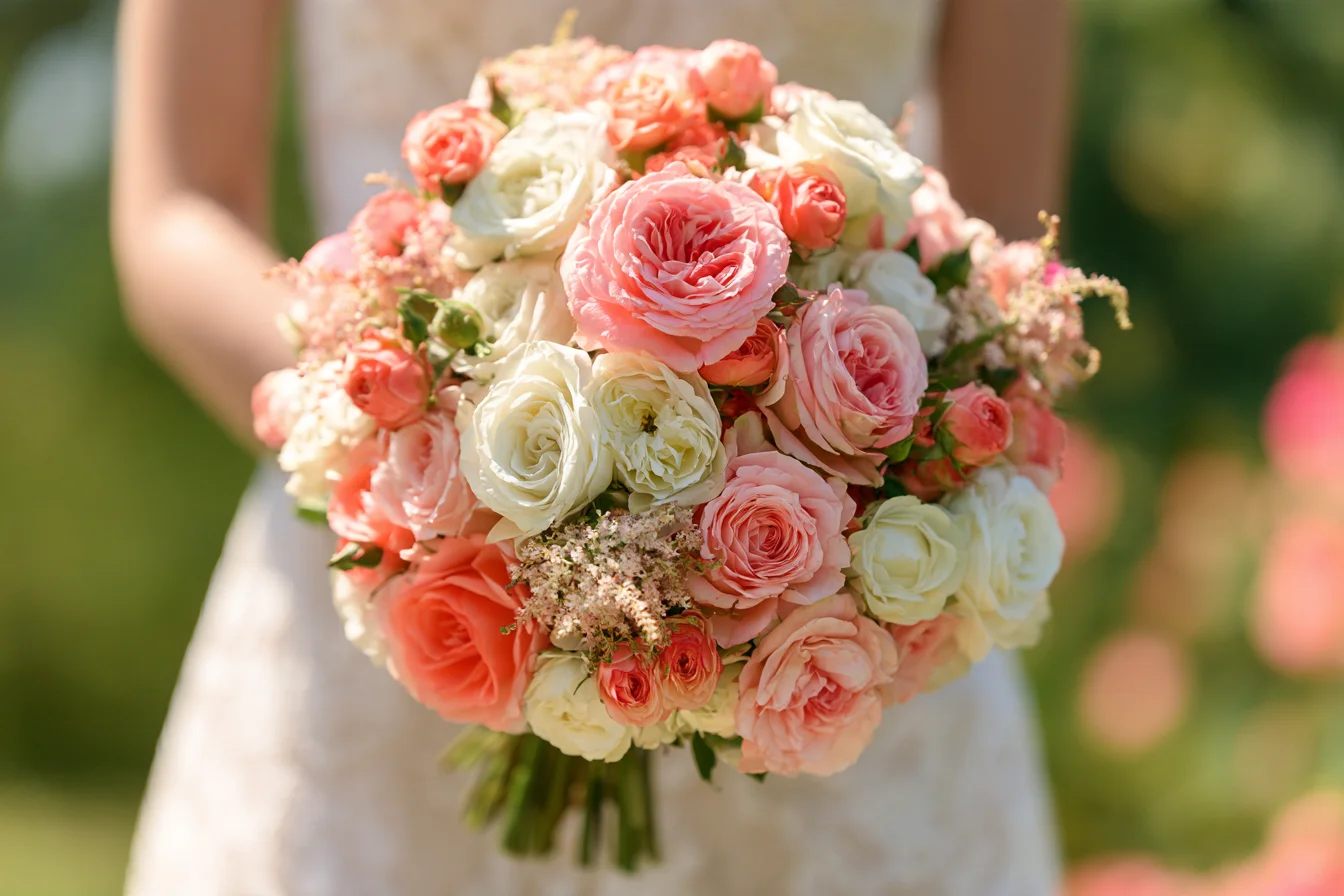
Color for Bright Outdoor Light
- White and green: A clean, timeless effect.
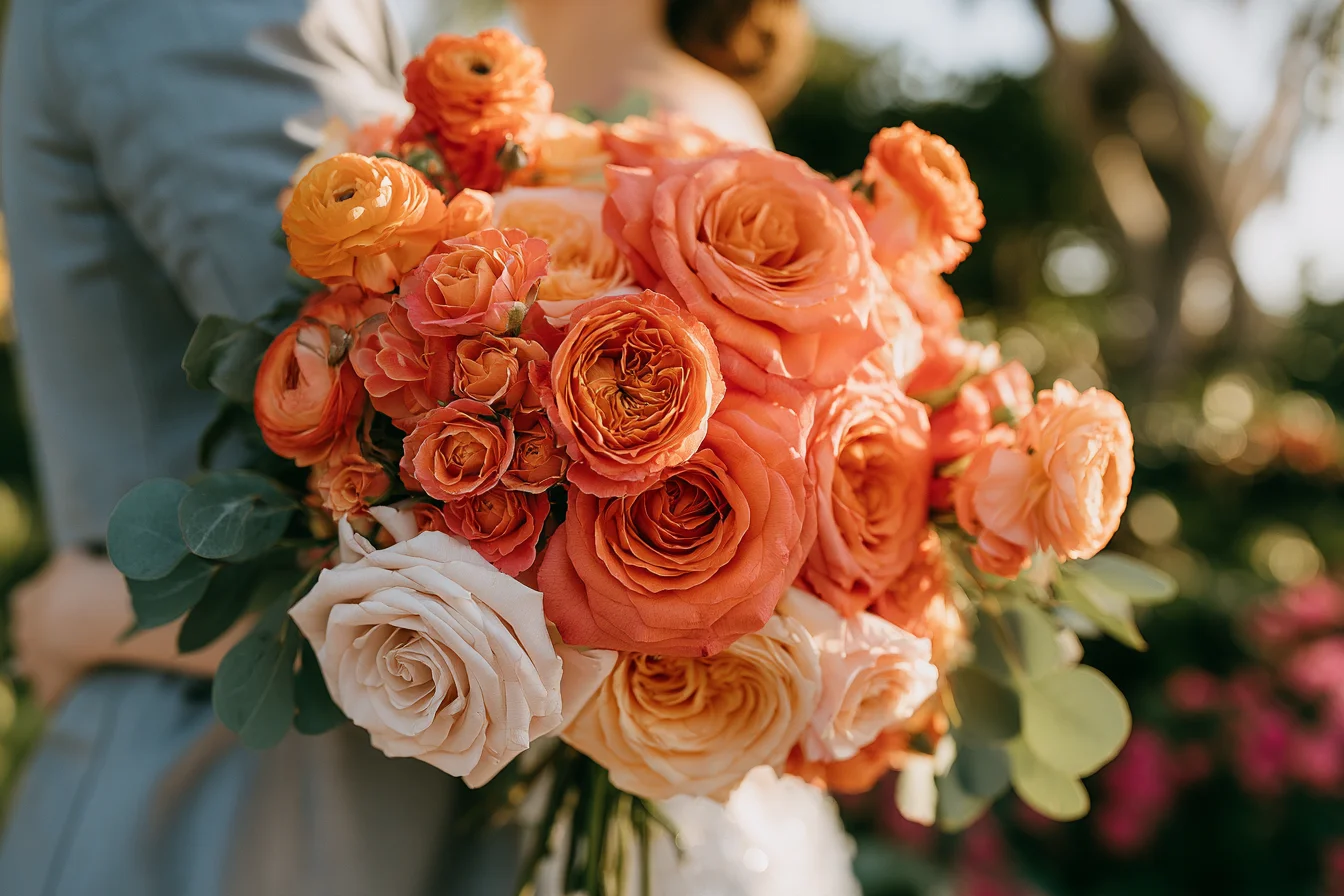
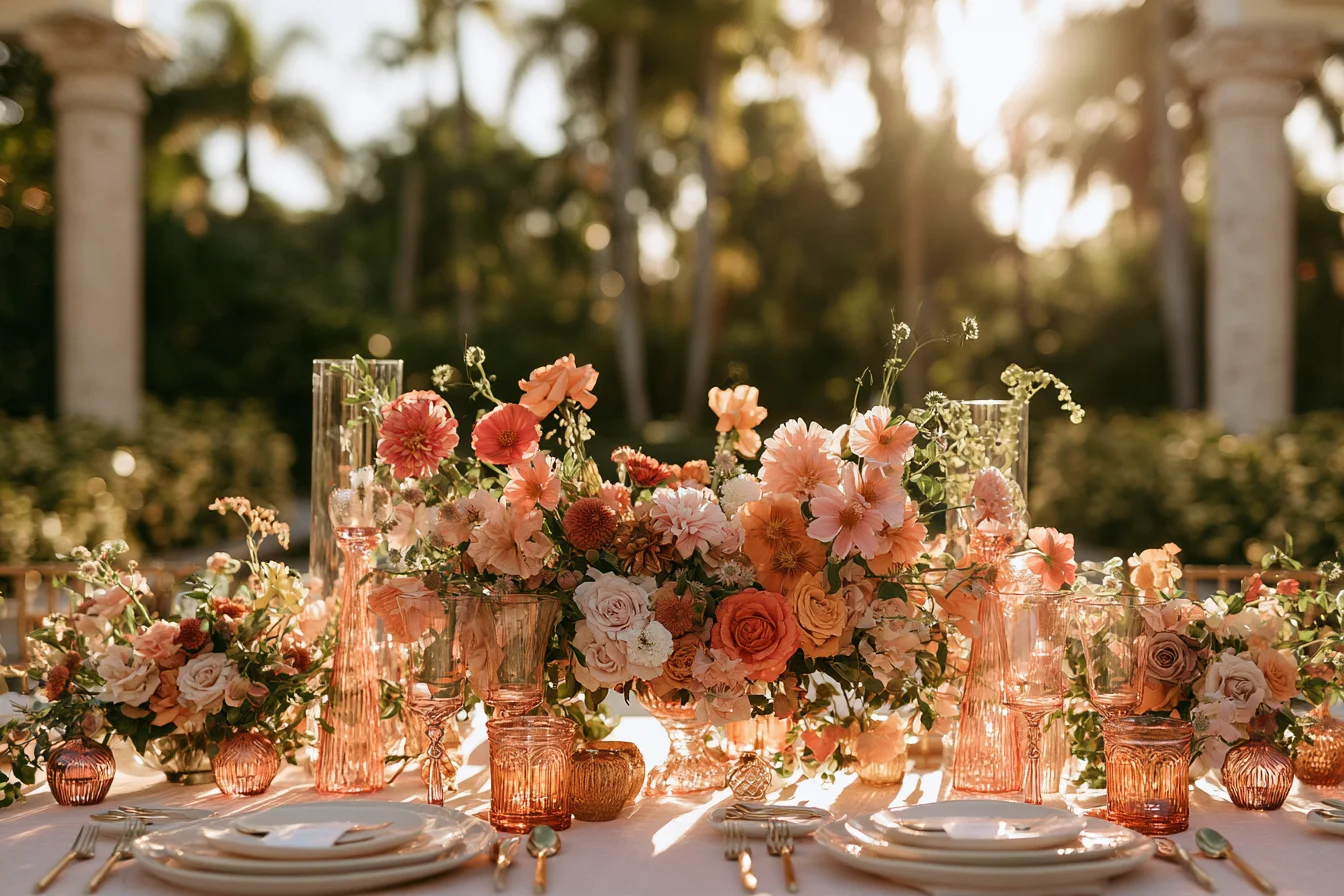
- Coral and peach: Complement warm Florida light.
- Sunset tones: Apricot, terracotta, blush, and amber feel romantic.
- Jewel colors: Burgundy, fuchsia, or deep orange offer definition.
- Soft neutrals: Understated elegance.
Remember that direct sunlight can make pale petals appear washed out and cause dark flowers to look especially intense, so review samples outdoors whenever possible.
Budget Realities
- Specialty tropical and imported varieties may cost more due to limited availability, transportation, and handling requirements.
- Seasonal local blooms can provide better value.
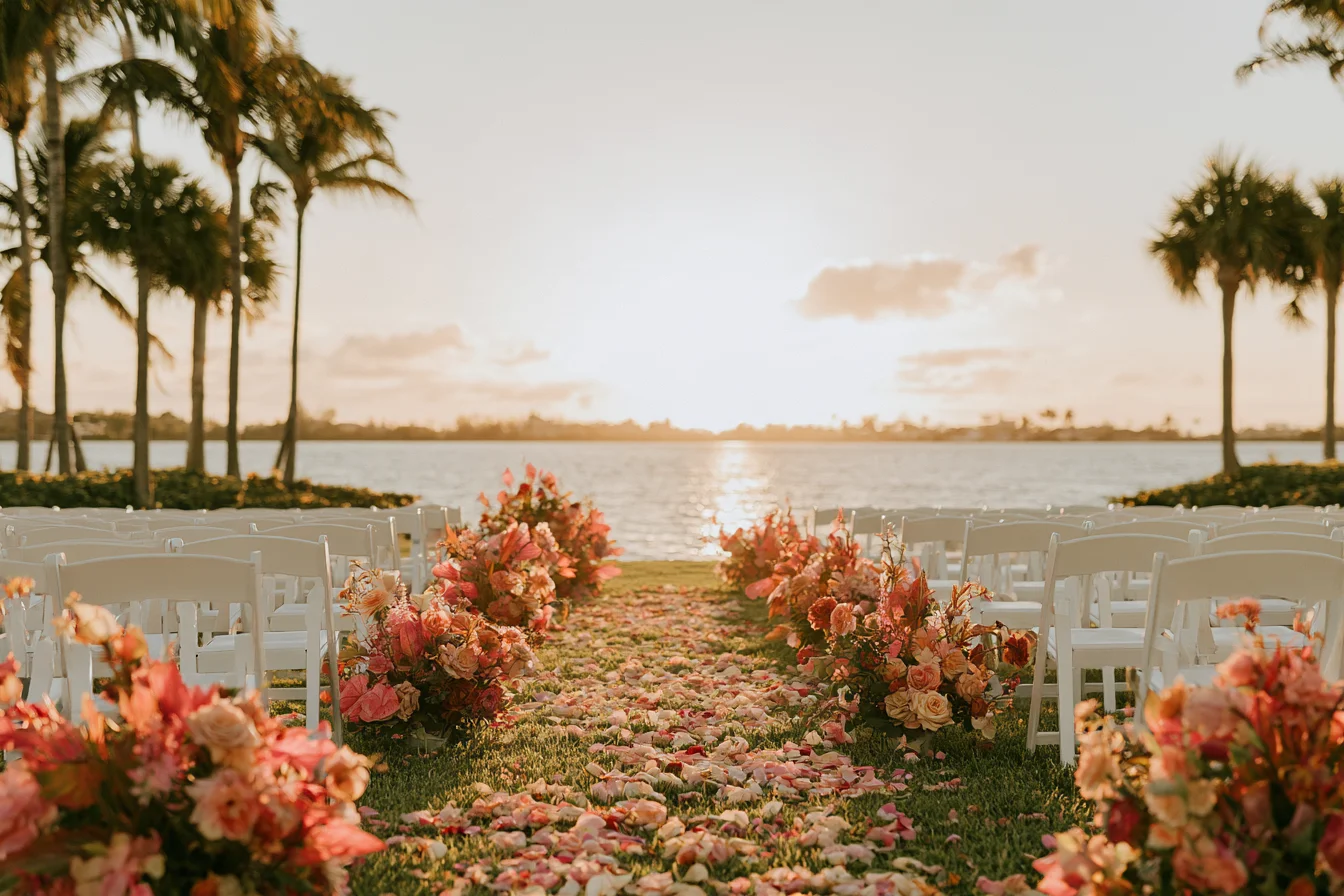
- Large installations such as arches, suspended pieces, and aisle meadows increase costs through mechanics, delivery, setup, breakdown, and labor.
- A smaller focal arrangement paired with thoughtfully placed aisle flowers may deliver visual impact without requiring a large installation.
Working with Your Coral Springs Florist
Ask your florist about:
- Current availability and seasonal substitutions
- Heat-tested varieties
- Delivery conditions and hydration methods
- Weather contingency plans
Before booking, take these steps:
- Confirm the ceremony date and time.
- Evaluate shade and weather exposure.
- List preferred and unacceptable flowers.
- Choose a durable bouquet and ceremony design.
- Reserve backup options.
Finally, schedule a final floral consultation close to the event so the selected wedding flowers, mechanics, and care instructions remain appropriate for the forecast and beautiful throughout your outdoor celebration.